Friday, November 21, 2014

Social Dialogue > Socratic Seminar: Mat Cutts Try Something

Instructional Strategy

  • Cues and Questions

Learning Activity
  
  • Social Dialogue > Socratic Seminar: Mat Cutts Try Something
    • Respond to the questions


Focus on Relevance > Pride Meaning & Content Survey


Instructional Strategy

  • Cues and Questions

Learning Activity
  • Focus on Relevance > Pride Meaning & Content Survey


View > Nick Veasey: Exposing the invisible

Instructional Strategy

  • Cooperative Learning

Learning Activity

  • View > Nick Veasey: exposing the Invisible >

Nick%2BVeasey%2B%2BExposing%2Bthe%2Binvisible%2B%2B%2BTalk%2BVideo%2B%2B%2BTED.com.png


http://www.ted.com Nick Veasey shows outsized X-ray images that reveal the otherworldly inner workings of familiar objects -- from the geometry of a wildflower to the anatomy of a Boeing 747. Producing these photos is dangerous and painstaking, but the reward is a superpower: looking at what the human eye can't see.

Tuesday, November 18, 2014

Diagrammatic Structure Analysis > Basic Shape

Instructional Strategy
  • Identify Similarities & Differences
Learning Activity

Goals:

As an art student, I will understand and be able to...
  • Develop a learning process that nurtures awareness of compositional structure.
  • Learn to evaluate composition as a viewer.
  • Communicate my visual perceptions and knowledge with others.
  • Learn to integrate effective composition into my own visual creations.
Concept:

  • Visual images can be reduced to diagrammatic shapes and lines in order to extract and clarify the compositional and proportional structure.  

New Information:

Awareness to the composition of a visual image enables us to assess whether it is arranged, organized or structured well enough to support the content (meaning) and intent of the artist.

The best way to learn the importance of composition and to recognize and evaluate it is to analyze a variety of visual images.  

An effective learning method is to make diagrammatic sketches using tracing paper or digital overlays on top of visual art reproductions.  In doing these diagrammatic analyses, we learn to extract and clarify the compositional structure.

Terms:

  • Analysis = Identifying and examining separate parts as they function independently and together in visual creations.
  • Composition = the arrangement, organization and structure that supports the relationships between the visual elements into a unified whole.
  • Structure = the given relationships of forms and energies.

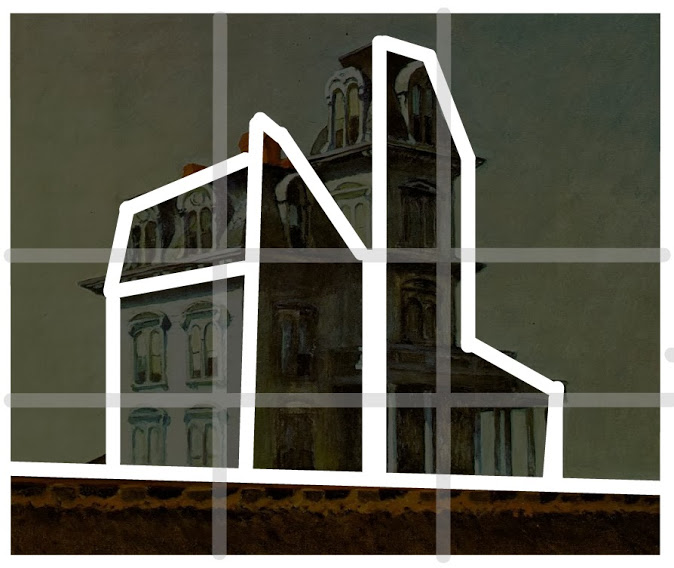
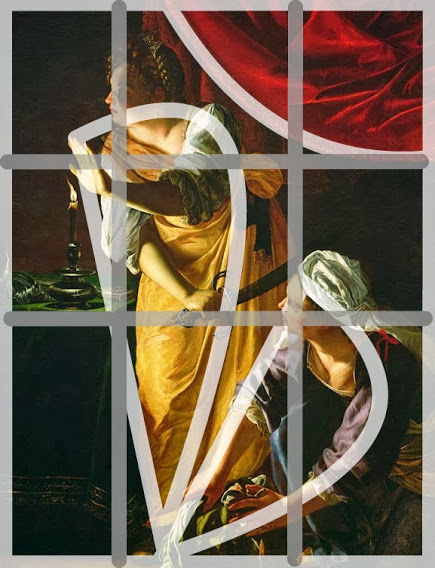
Analyze > Basic Shape Analysis Activity:

  • Perform a diagrammatic analysis of composition using basic shapes.
  • The basic shapes reveal structures that affect balance, symmetry and stability.

Extract > Structural Basic Shapes:

  1. Copy an art reproduction into an online image editor.
  2. Create a new empty layer on top of the art reproduction.
  3. On that layer, outline the format (the outer edge).
  4. On that layer, divide the art into basic shapes, (triangles, rectangles, circles).  

Analyze > Composition:

  1. Explain > proportion.  
    1. How do the size of the shapes relate to one another within the format?
    2. Does anything seem out of place?
  2. Explain > balance.  
    1. How are the shapes distributed within the format?
    2. Would this visual tip over?
  3. Explain > dominance/subordination.  
    1. Which shapes are foreground and which are background?
    2. Which shapes seem more important?
  4. Explain > Unity.
    1. Are the shapes well placed within the format?
    2. Do the shapes appear to ‘go together’ - is there a sense of coherence?  
basic_shapes_3rds.jpg

basic_shape_3rds.jpg

Monday, November 17, 2014

Diagrammatic Structure Analysis > Lines of Force

Instructional Strategy
  • Identify Similarities & Differences
Learning Activity


Goals:

As an art student, I will understand and be able to...
  • Develop a learning process that nurtures awareness of compositional structure.
  • Learn to evaluate composition as a viewer.
  • Communicate my visual perceptions and knowledge with others.
  • Learn to integrate effective composition into my own visual creations.

Concept:


  • Visual images can be reduced to diagrammatic shapes and lines in order to extract and clarify the compositional and proportional structure.  

New Information:


Awareness to the composition of a visual image enables us to assess whether it is arranged, organized or structured well enough to support the content (meaning) and intent of the artist.

The best way to learn the importance of composition and to recognize and evaluate it is to analyze a variety of visual images.  

An effective learning method is to make diagrammatic sketches using tracing paper or digital overlays on top of visual art reproductions.  In doing these diagrammatic analyses, we learn to extract and clarify the compositional structure.


Terms:

  • Analysis = Identifying and examining separate parts as they function independently and together in visual creations.
  • Composition = the arrangement, organization and structure that supports the relationships between the visual elements into a unified whole.
  • Structure = the given relationships of forms and energies.


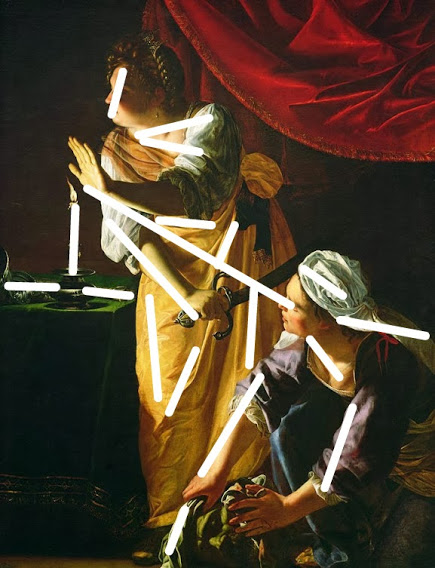
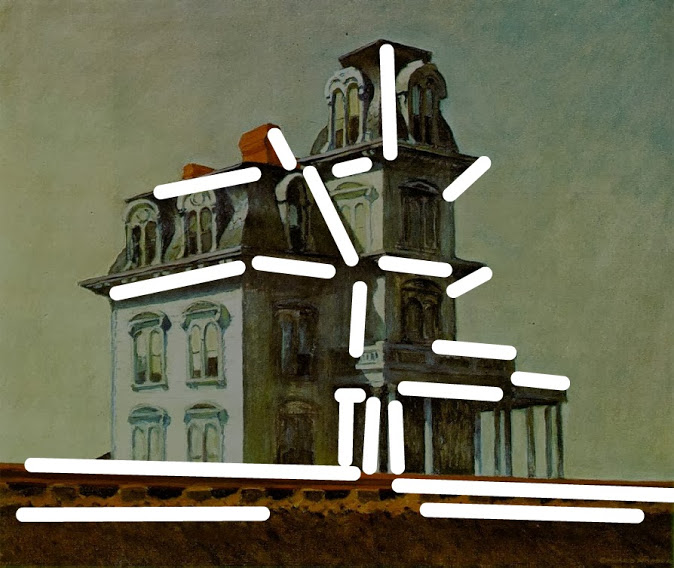
Analyze > Structure - Lines of Force

  • Perform a diagrammatic analysis of composition using lines of force
  • Lines of force, direction and thrust reveal the energy of the work and how the viewer’s gaze is directed.

Extract > Structural Lines of Forces:

  1. Copy an art reproduction into an online image editor.
  2. Create a new empty layer on top of the art reproduction.
  3. On that layer, trace lines of force along edges of shapes or values.

Analyze > Composition:

  1. Explain > stability.  
    1. Are lines vertical and horizontal providing stability?
    2. Are the lines slanted and diagonal providing action and energy?
  2. Explain > energy.  
    1. Do the lines thrust soft, dull, fast, active, flowing or rhythmic?
  3. Explain > structure.  
    1. Do the lines thrust out of the work and take the viewer’s gaze with them?
    2. Do the lines move the viewer’s gaze around the work towards focal points?
  4. Explain > Unity.
    1. Are the lines harmonious and flowing or choppy and helter-skelter?

line_energy.jpg

line_energy_hopp.jpg

Studio Activity: Micro-Structure

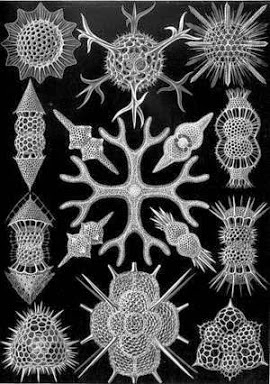
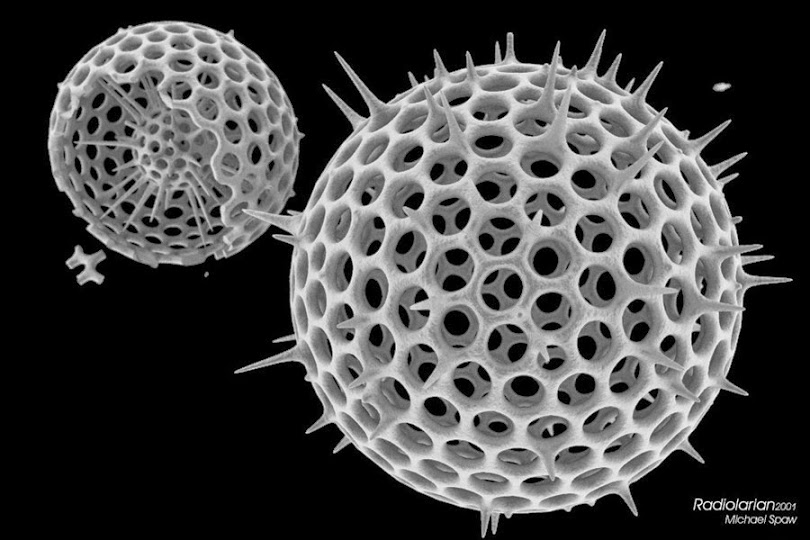
RTEmagicC_423px-Haeckel_Spumellaria_01.jpg.jpgStudio Activity: Micro-Structure


Goal:  Use an analysis of nature and its structure as a basis for a design and composition.


Image_Radiolarian.jpgUse a virtual microscope online to study radiolaria and diatom or study illustrations here > http://goo.gl/HvSZES or here > http://goo.gl/b5CPCx .  As you analyze them, seek the natural structure found in repetition and replication that binds and unifies the element.  Make some preliminary sketches based on these observations and analysis of these designs.  In other words, accurately draw what you observe first, then use that as a stimulus to make an interesting visual design.  Change, simplify, elaborate, combine, transform the images as you desire.  Make a charcoal or pastel abstraction to suggest unity of form and surface decoration.

Trigger Mechanisms:
Order, change, simplify, combine
Visual examples > http://goo.gl/5FHqYm
Visual examples > http://goo.gl/B1vC82


Materials:

Paper, charcoal, pastel, cut-paper, mixed media, paint


Hope Vignette Album > Setting Objectivesp

Goals:
Instructional Strategy

  • Reinforcing Effort

Learning Activity

Notes


Instructional Strategy

  • Setting Objectives

Learning Activities


Notes


Access Prior Knowledge:

Instructional Strategy
  • Cues and Questions

Learning Activity


Friday, November 14, 2014

Providing Feedback > Interest Silhouette

Complete the following Learning Activities:

Generalize, Reflect & Publish:

Instructional Strategy

  • Providing Feedback
Learning Activities

___________________________________________________________________________


Learning Activity 1


Remembering:

  • Choose > an image from the Event and copy the URL.
    • log in with your G+
    • paste the URL of the artwork
  • Tag > ‘hotspots’ that address the Topics below:
    • Respond to each question.
    • Express your judgments with supporting evidence found in the image.
  • Tag > the artists name in the post using the ‘+’ symbol then their name
    (ex: +VinceKuepper)

Understanding:

  • Tag > Placement:
    ...how the rule of thirds was or was not followed?
...how the visual weight balances or imbalances the composition?

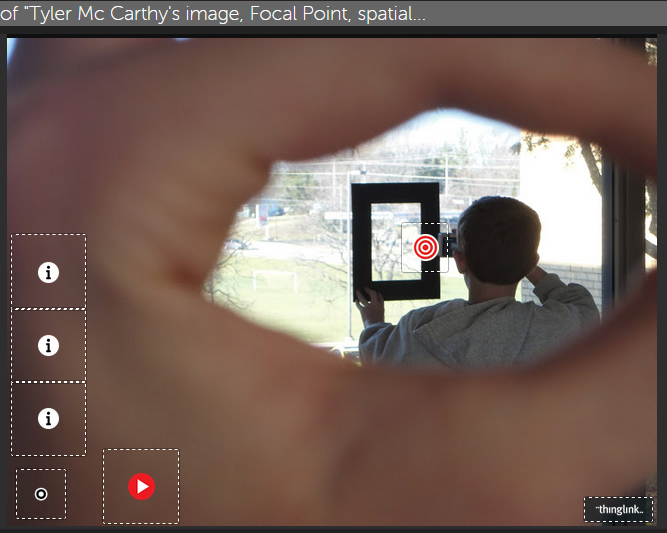
  • Tag > Focal Point:
...what area of the picture commands your attention the most?
...how the focal point is emphasized? (contrast, placement…)
...how the focal point clarifies the message or meaning of the image?
  • Tag > Background:
...does the background distract the viewer away from the focal point?
...how the background contributes to the message of the image?

Analyzing:

  • Tag > Composition:  
...ways the image uses leading lines, vertical lines, or diagonal lines...?
...ways the image uses framing, contrast in color or shape...?
...the sense of depth in the image (deep, shallow, focused, blurred…)?
...how unity is achieved (repetition or common elements)?

Evaluating:

  • Tag > Evaluation:
    ...how the artist’s successfully express his/her intention or message?  
    ...what is the mood and how was it created?
...ways this image could be improved?

  • Tag > a significant quotation that describes the mood of the artwork and explain how the quotation as an analogy provides a deeper understanding of the artwork and its meaning.

  • Tag > a ‘soundtrack’ for this artwork on YouTube and explain why you choose that particular music for this particular artwork?  What or how the tempo / melody of the music similar to something in the artwork.

Creating:

  • Click > the share button and copy your thinglink URL
  • Share > your thinglink URL to the G+ Photo Community > http://goo.gl/34X4wo

___________________________________________________________________________

Learning Activity 2
  • Positive Feedback > +1 every image that deserves it
___________________________________________________________________________

Learning Activity 3
___________________________________________________________________________

Learning Activity 4