Showing posts with label Illustration. Show all posts

Monday, May 18, 2015

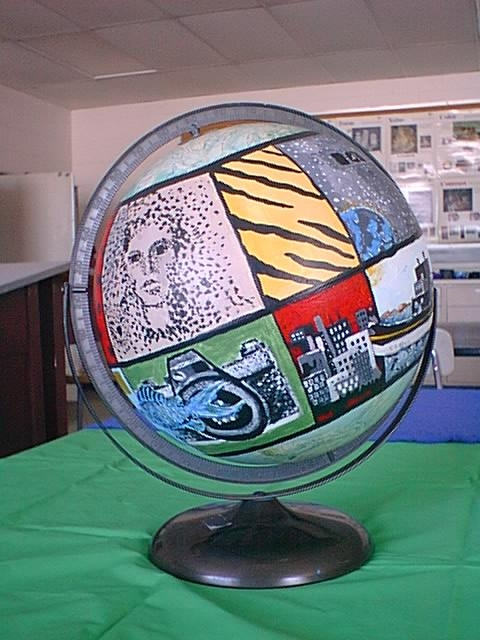
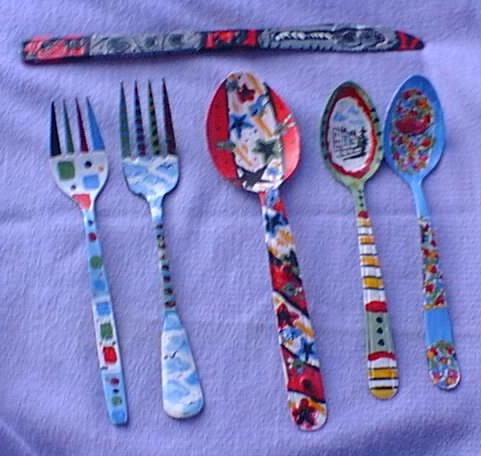
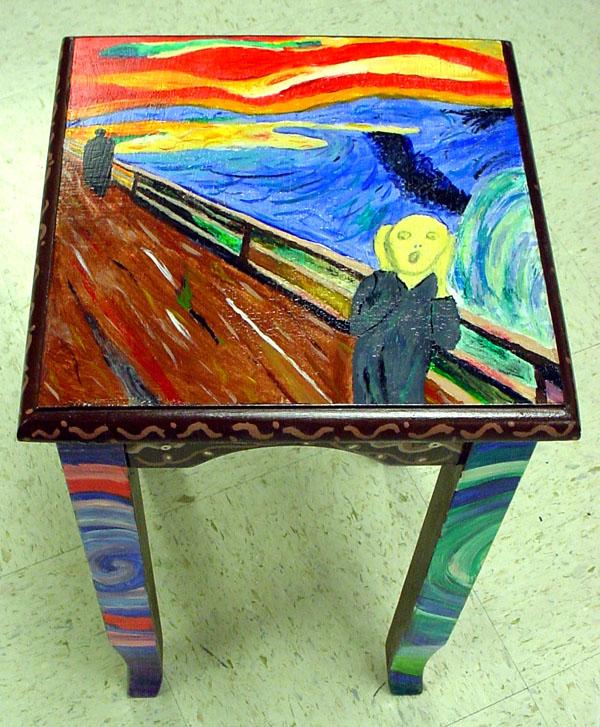
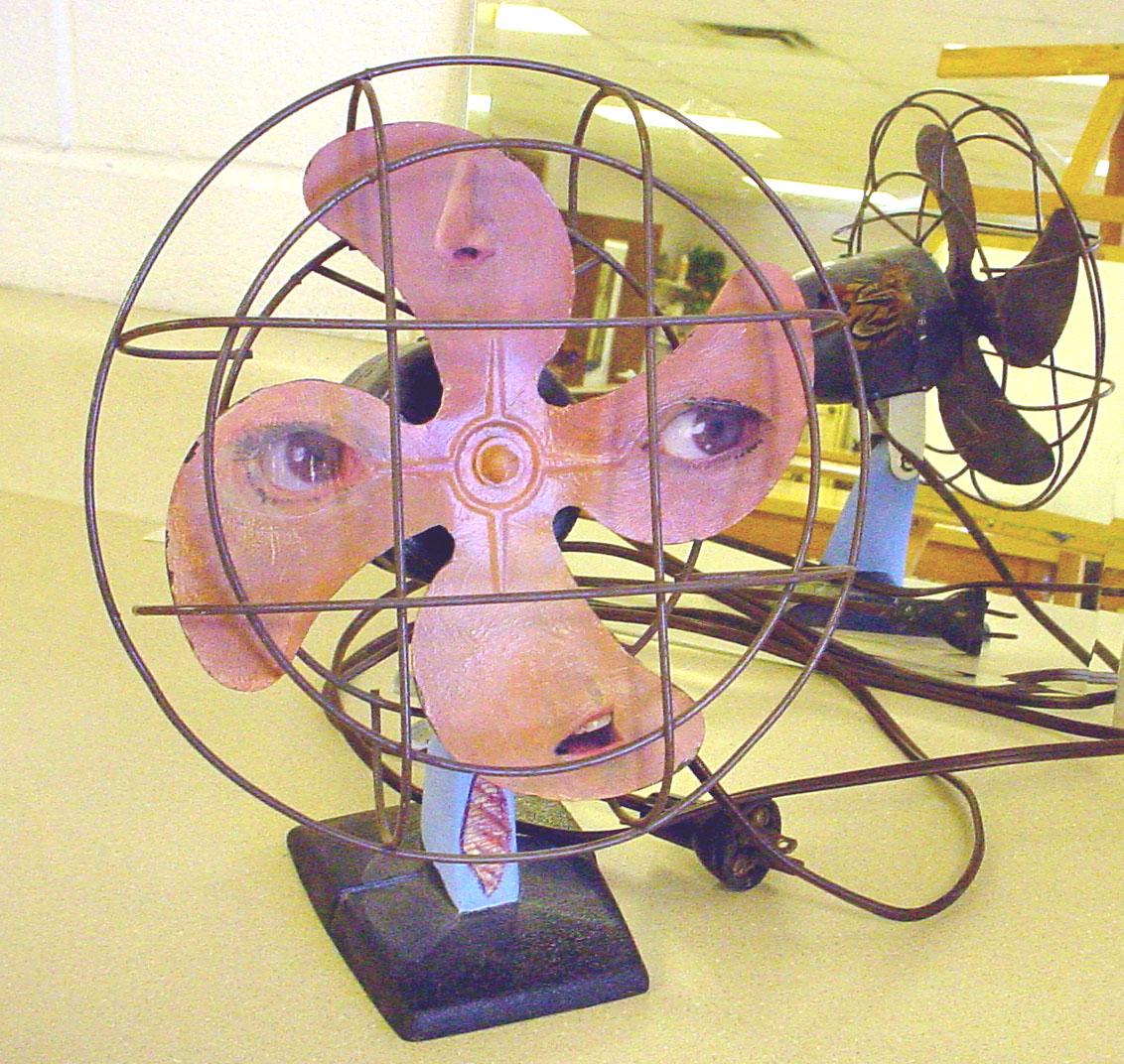
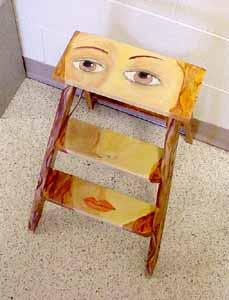
Create > Object Painting
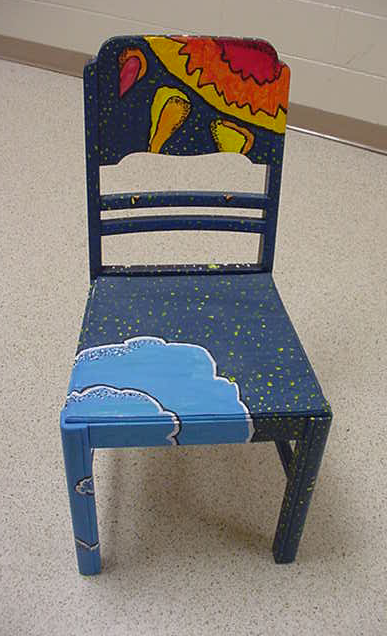
Create > Object Painting


Goal: Use historically significant art to create an aesthetic object from an abandoned object.


Studio Activity:
Find an interesting object from the garage, attic, flea market, auction, or second-hand store.  
Pick a famous painting to use as the primary camouflage element.
Transform the object by decorating its entire surface with paint using the defining characteristics of a famous art style movement or a specific painting.
Mimic the the color scheme, brush stroke method or application and the use of subject matter.   


Art History:
Study the art style movements: Abstract Expressionism, Baroque, Postmodern, Surrealism, Futurism, Impressionism, Post-Impressionism, Art Nouveau, Art Deco, Bauhaus, Cubism, Expressionism


Trigger Mechanisms:
Reinterpret, Translate, Disguise, Substitution, Transform


Visual Examples:


Monday, April 27, 2015

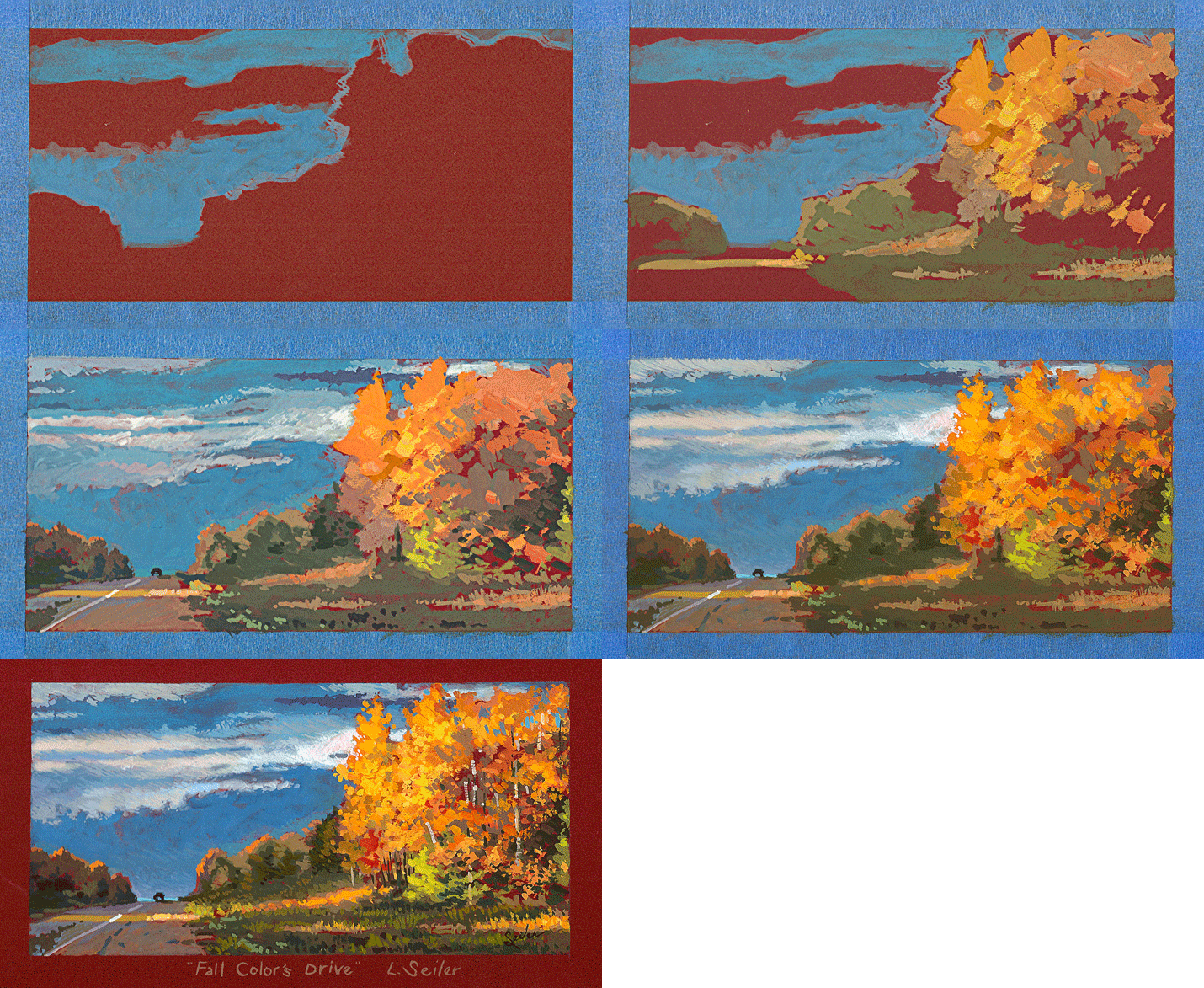
Create > Grisaille Underpainting Landscape

Create > Grisaille Underpainting Landscape


Goal: Create a Landscape painting using a Grisaille Underpainting Technique

Concept:
Edgar Payne said, "A really good painting requires 'color vibration,' where each color feeds off one another.  An undertone assures that one color is sensed all over the piece pulling the work together.

Studio Activity:
Use an underpainting tone then paint a complementary based color scheme on top.
A red underpainting will enhance the greens of nature to vibrate and energize yet pull the work together harmoniously.

Visual Examples:
Pinterest > Grisaille & Underpainting > http://goo.gl/qgD26k


Monday, April 20, 2015

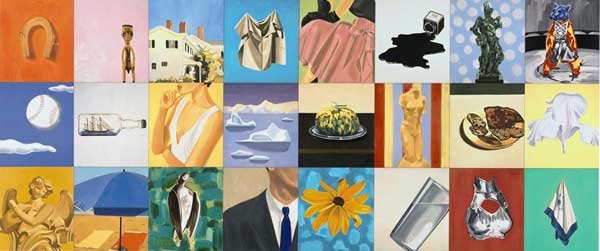
Create > Color Temp Image Matrix

Create > Color Temp Image Matrix


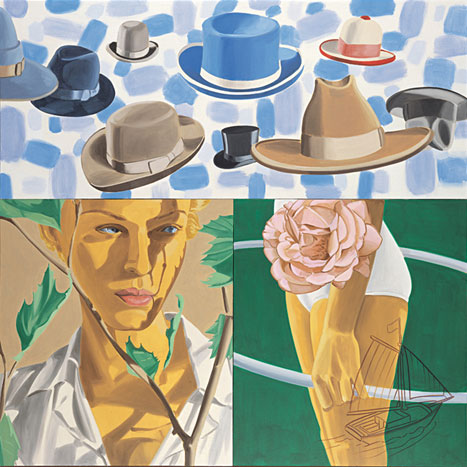
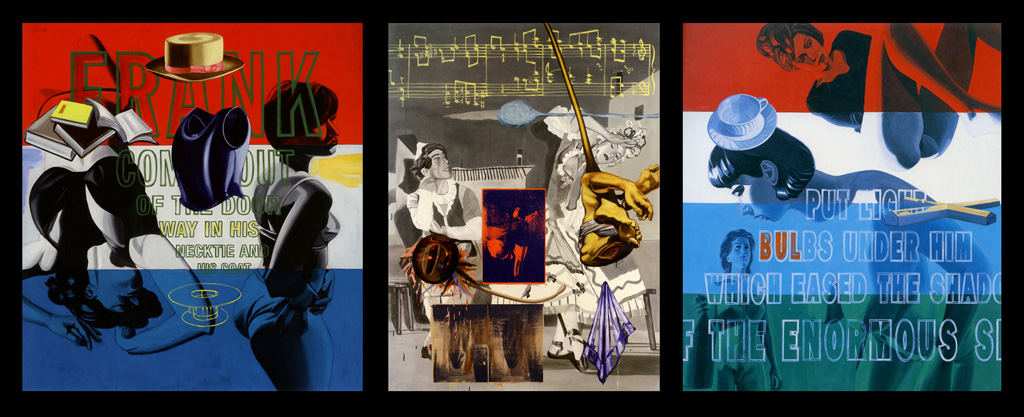
David Salle
Nouns

Goal: Arrange drawings and collage elements into a matrix pattern with either a warm or cool color temperature.   

Concept: Images grouped together appear conceptually linked

Studio Activity:
  • Make at least 3 observational drawings and render with warm or cool colors.
  • Print images and work into them with warm or cool color pencils.
  • Find collage elements in books or magazines.
  • Arrange collage elements and drawings into a matrix pattern.
  • Overlay outlines of objects, persons or forms if you wish.
Visual Examples:


David Salle
Memory

David Salle
Distance from Nowhere 

David Salle
Rips in the Mirror 


Monday, April 13, 2015

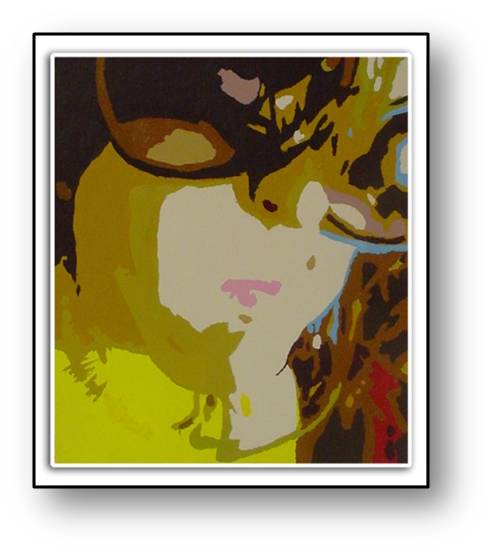
Create > Color Scheme Portraits

Create > Color Scheme Portraits


Concept:
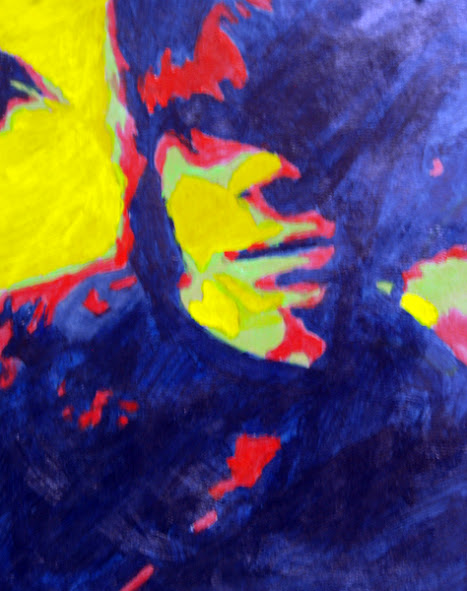
Using a specific color scheme emphasizes drama and mood to a portrait adding to its meaning.


Studio:

  • Crop a portrait photo (7"x10")
  • Image>Adjust>Levels to increase the contrast
  • Filter>Artistic>Cutout
  • Print, Grid and Transfer to a board
  • Choose a color scheme to evoke a specific mood
  • Render in acrylic paint


Color Schemes: > http://www.color-wheel-artist.com/color-schemes.html

1 or 2 Colors
  • Monochromatic monochromatic color wheel
  • Complementary Complementary Color Wheel
  • Near Complementary Near Complementary Color Wheel

3 Colors:
  • Split Complementary Split Complementary Color Wheel
  • Triad Triad Color Wheel
  • Complementary Triad Complementary Triad Color Wheel
  • Modified Triad Modified Triad Color Wheel


4 or More Colors:

  • Rectangular Tetrad Rectangular Tetrad Color Wheel
  • Square Tetrad Square Tetrad Color Scheme
  • Adjacent Tetrad Adjacent Tetrad Color Wheel
  • Analogous Analogous Color Wheel
  • Analogous Complementary Analogous Complementary Color Wheel
  • Multi-Color Multi Color Wheel


Tuesday, April 7, 2015

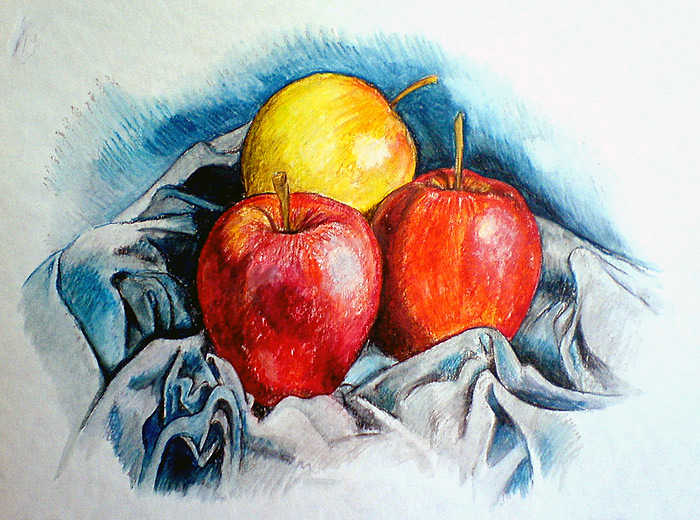
Create > Color Scheme Still Life

Create > Color Scheme Still Life


(Triad Harmonies: 3 equidistant hues)

Goal: Create an accurate still life rendering in a chosen color scheme.

Studio Activity:
Take a photograph or sit and draw from observation a still life arrangement.  
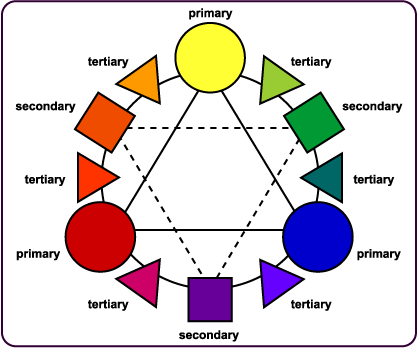
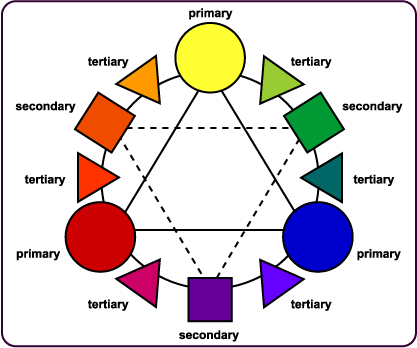
Choose a color scheme using the list and image below.
  • Triad Harmonies: three equidistant hues
  • Complementary Colors: opposite hues
  • Split Complementary: One hue with hues on either side of its complement
  • Analogous: adjacent  hues


Accurately render the composition using your color scheme and a full range of values.

Visual Examples:

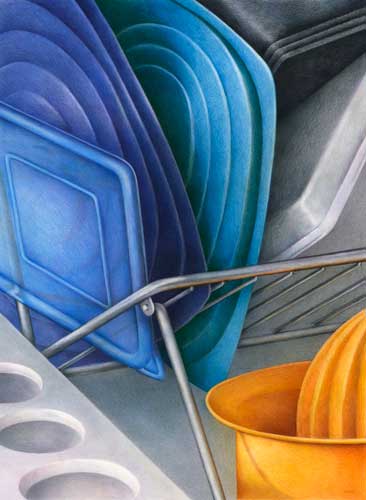
(Complementary Colors: opposite hues)


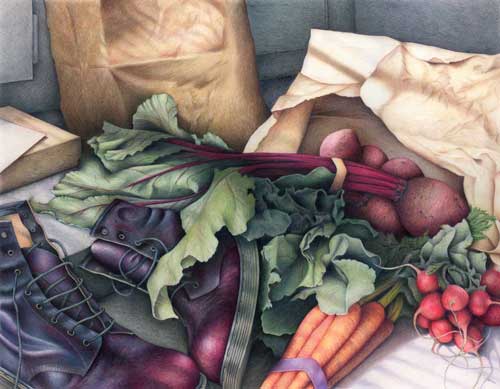
(Split complementary: one hue with hues on either side of its complement)


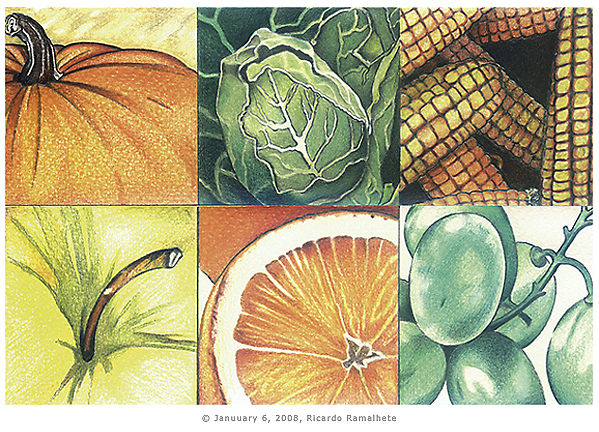
(Analogous: adjacent hues)


Generalize, Reflect & Publish:
Instructional Strategy
  • Evaluate the results
Learning Activity
Reflect > Should I go back and rework anything?
  • Have you done anything special with the art elements (line, color, shape, texture, value)  and principles? (Unity/variety, balance, emphasis contrast, rhythm, proportion/scale, figure/ground relationship)
  • What are the dominant shapes, expressive forms, color schemes, and textures that carry significance?
  • Is there symbolism used in the work to convey meaning other than what one sees?
  • Is the work ordered and balanced? Or chaotic and disturbing?
  • What gives the work its uniqueness?
  • Does the work evoke any feelings?

Instructional Strategy
  • Providing Recognition
Learning Activity
Publish > Share your album to our G+Community > Concepts & Creations category

Instructional Strategy
  • Providing Feedback
Learning Activity

Critique >
  • Give positive feedback > +1 every image that deserves it
  • Give peer feedback > VTS Visual Thinking Strategies > http://goo.gl/1WWmBY
Self-assess >

Monday, March 23, 2015

Monday, March 9, 2015

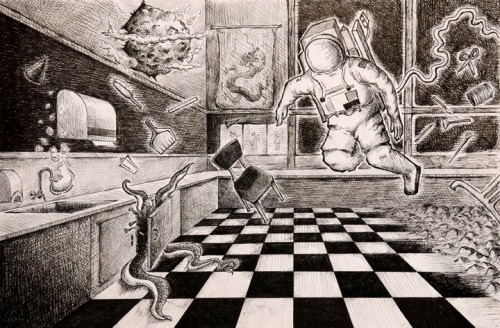
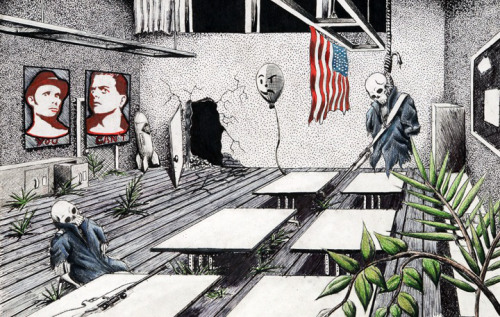
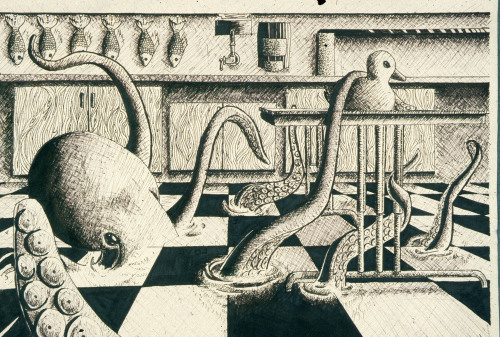
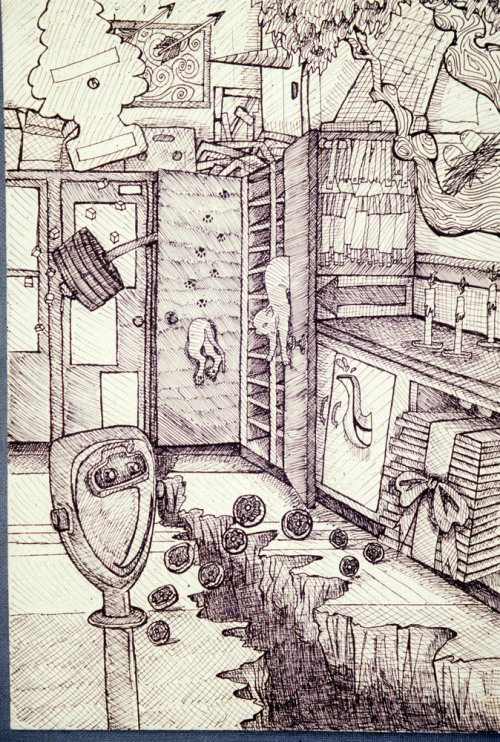
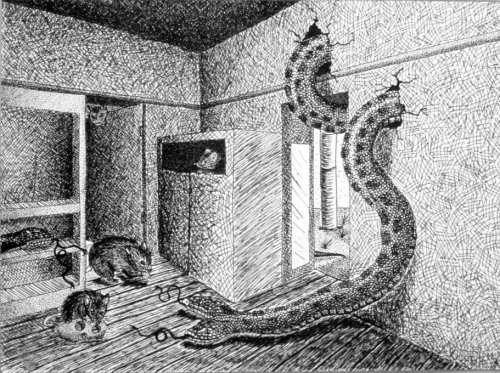
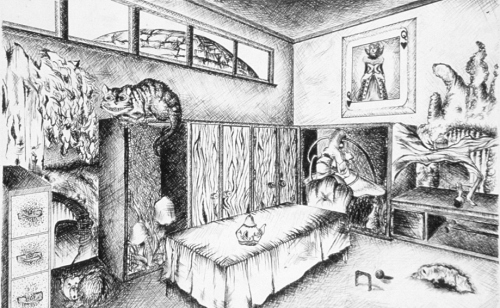
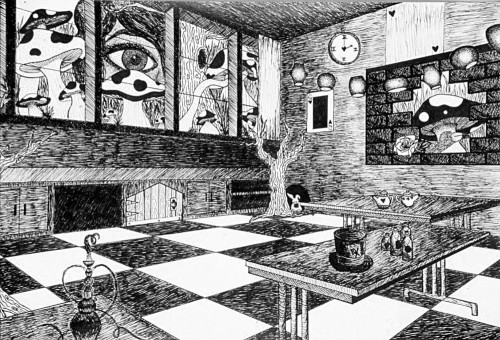
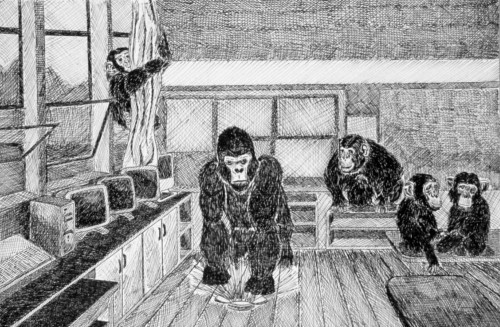
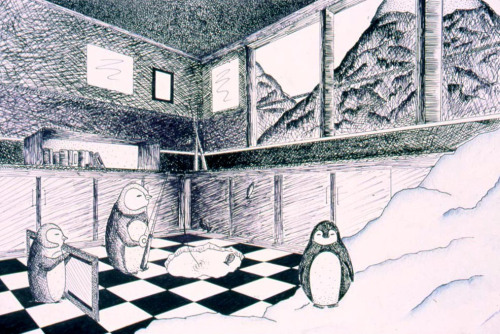
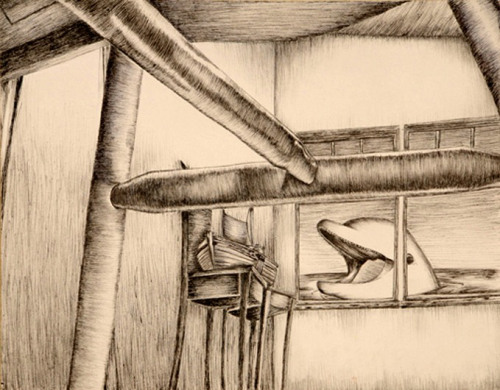
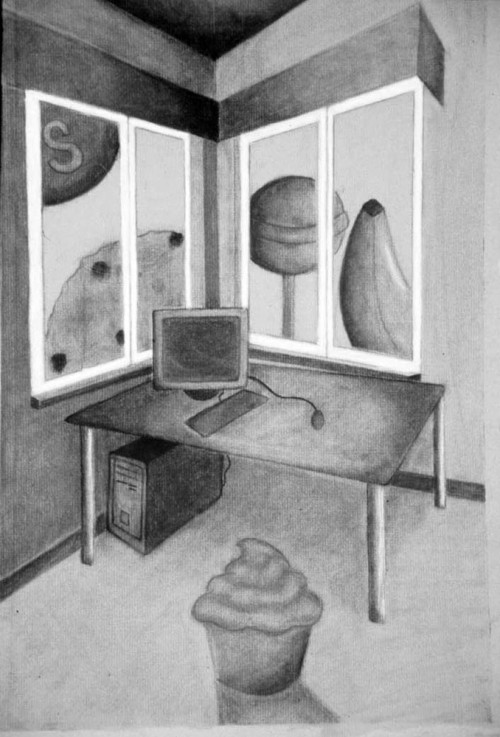
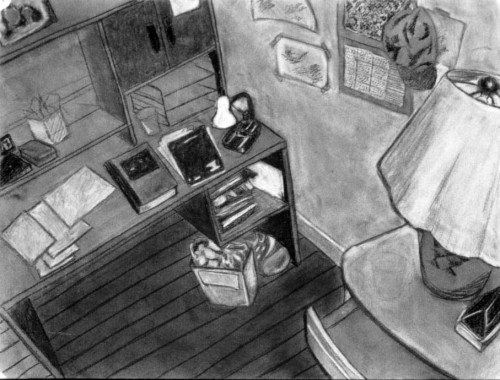
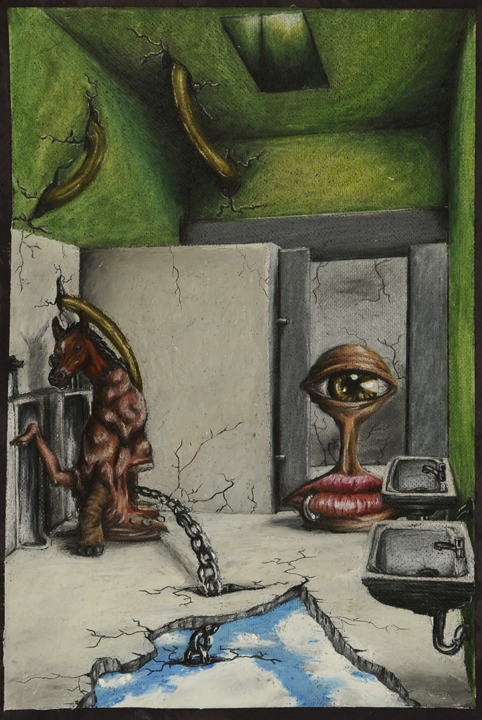
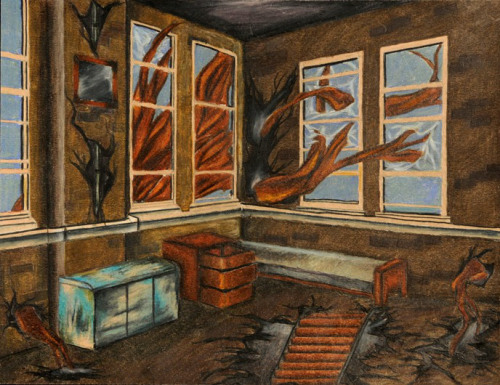
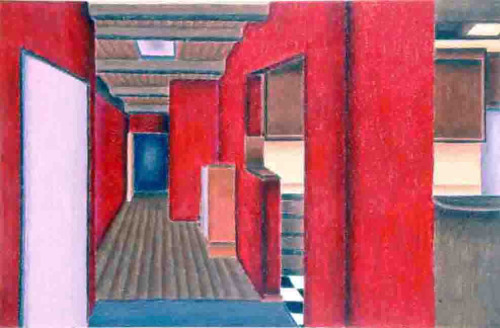
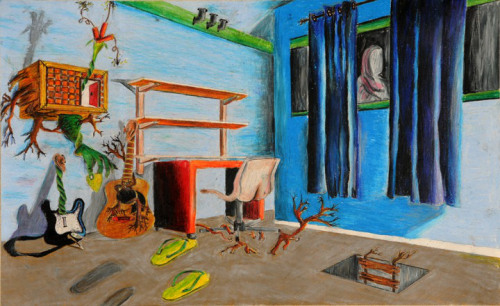
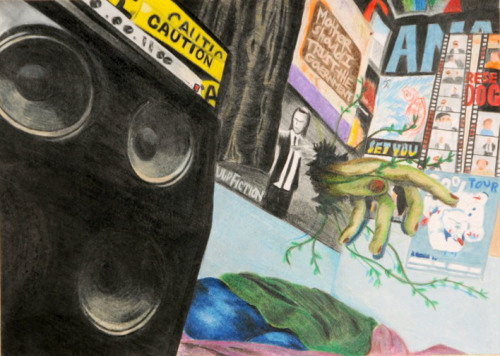
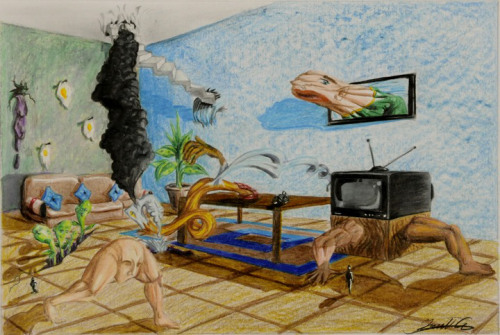
Create > Surreal Interior in perspective

Create > Surreal Interior in perspective

Rv05

Goal: Create a fantasy interior space using linear perspective and surrealist influences.

Studio Activity:

  • Emphasize the imaginative powers of the subconscious.
  • Show a strange and unreal-like imagery in the collage.
  • Create a perspective drawing in pen & ink based on your collage.
  • Use a variety of ink shading techniques.
  • Use compositional principles like balance, center of interest, and harmony.

  1. Take a photo of the space you’ve chosen to depict and print it in black and white.
  2. Find the vanishing point(s) by lining up rulers with the lines in the room. Draw a few of these lines directly on your print in red pen.
  3. Fantasize your space to trigger surreal, preposterous, outrageous, bizarre thoughts.  
    • Topple mental and sensory expectations.  
    • How far out can you extend your imagination?
  4. Think:  “What-if” thoughts: What if automobiles were made of brick?  What if alligators played pool?  What if insects grew larger than humans?  What if night and day occurred simultaneously?
  5. Quickly create a collage by gluing images found in magazines, online etc. to create a fantasy environment inside your room. *You will use this collage to make a drawing, the collage will NOT go in your portfolio, it’s just a guide for your drawing.
  6. Use the collage to create a drawing. Sketch in pencil first, starting with the vanishing points and major parts of the room. Then add shading using various pen & ink techniques.  *Remember, you CANNOT just print out one picture from the internet and copy it. YOU should take the photo yourself, or use a collage that combines several different photos.

Trigger Mechanisms:  Fantasy, Space, Surrealism, Dreams

Visual Examples:
The old masters:
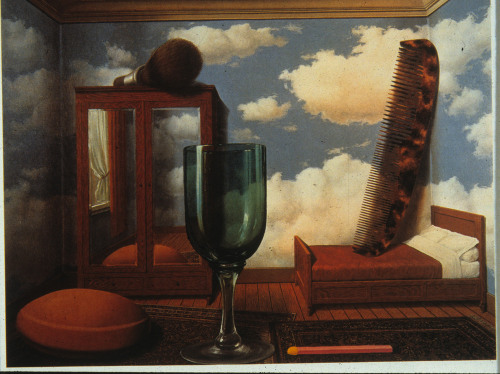
Rene Magritte > http://www.magritte.be/
New masters:

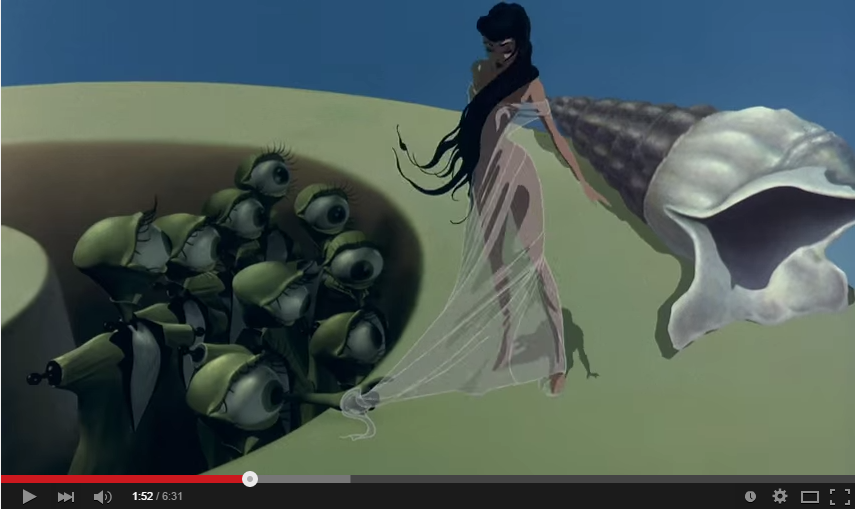
Watch > Destino (Dali & Disney) > https://www.youtube.com/watch?v=1dIznsAdTOE
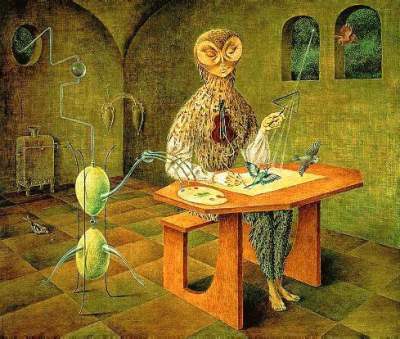
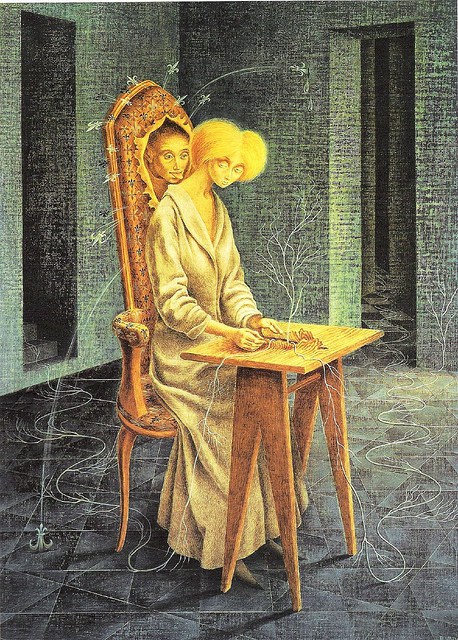
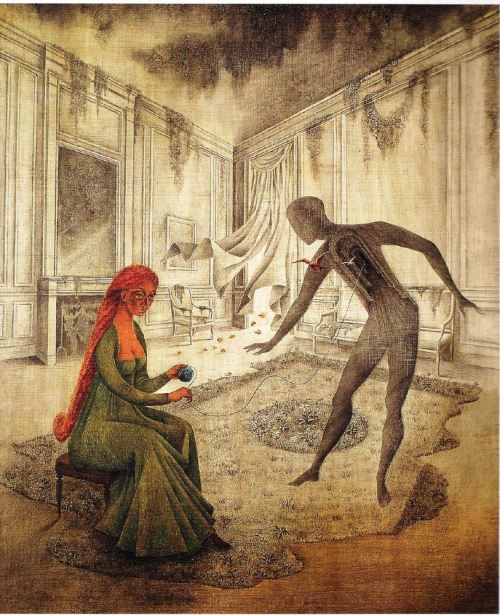
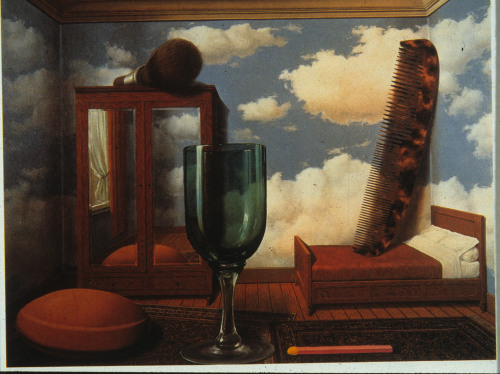
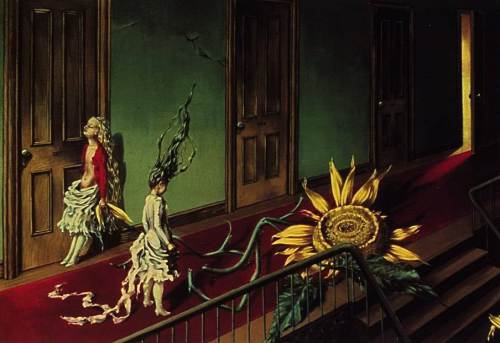
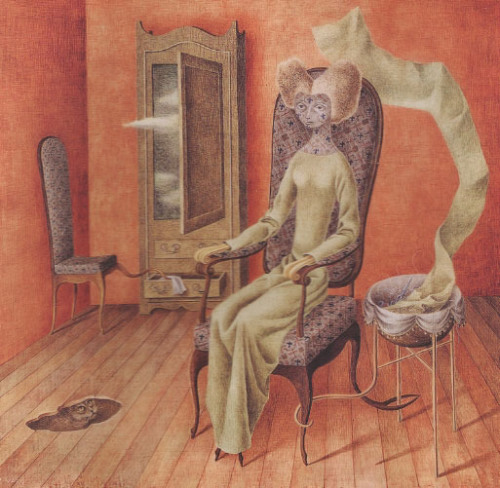
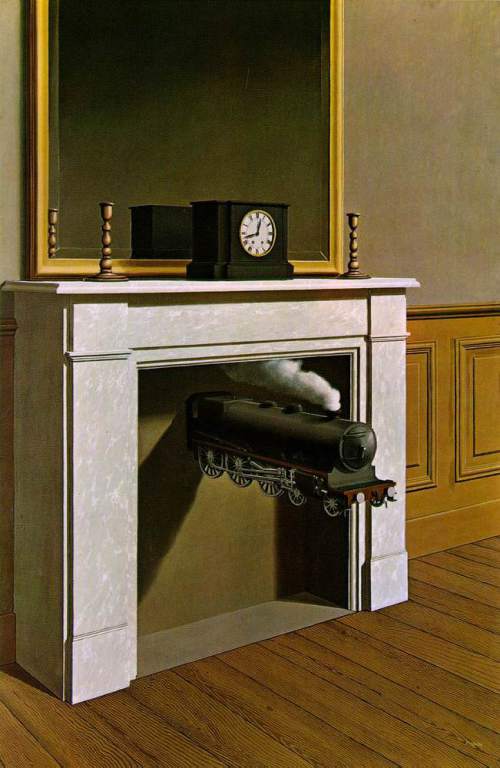
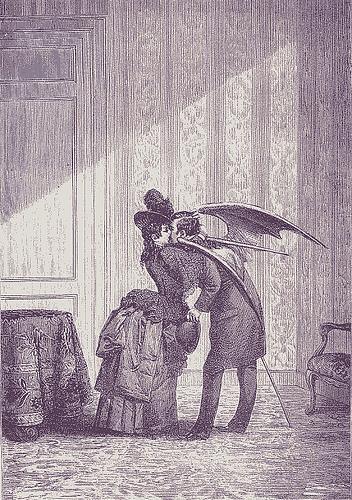
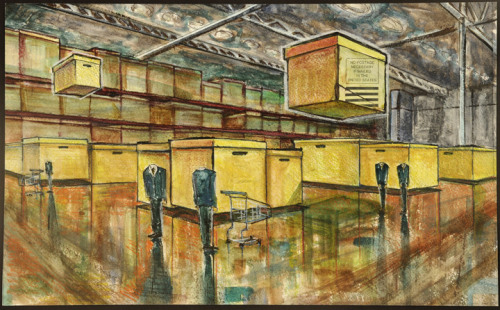
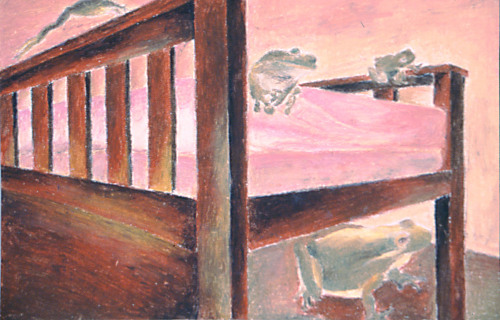
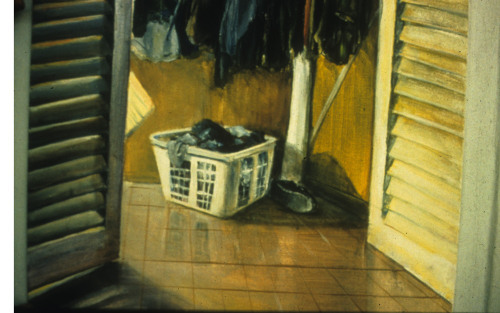
Examples of interior spaces and rooms by master surrealist artists.415773419_bfee0bb073_z415772248_00466e1b93_oIp39_copyTanningMimetismonitashadeogunTumblr_l4c4mce5qd1qa4s0qo1_500Time


Examples of surrealist collages of interior spaces:
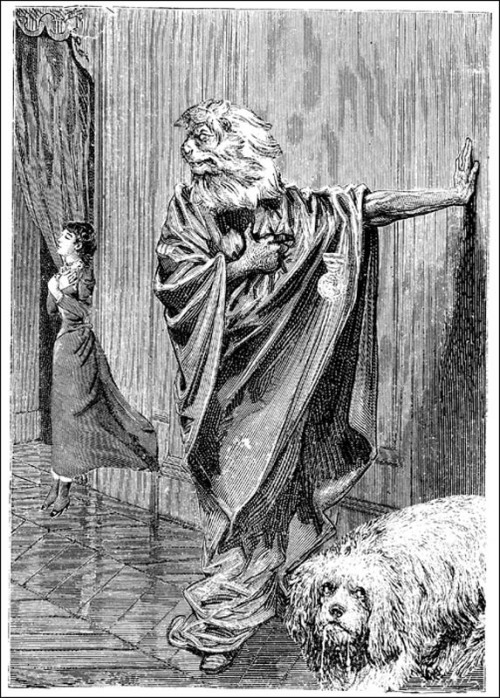
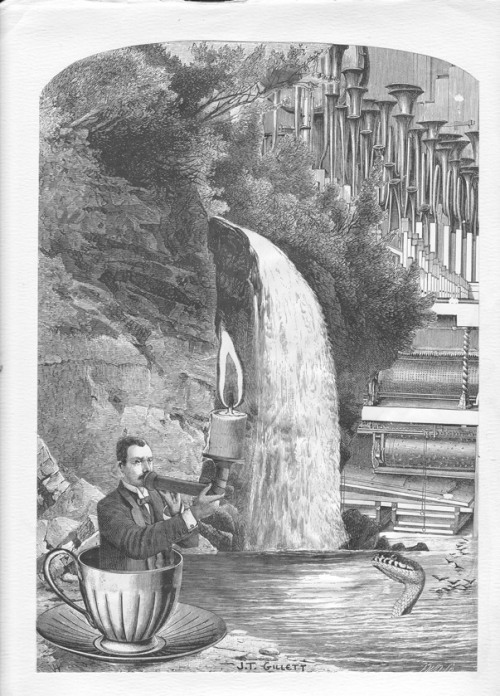
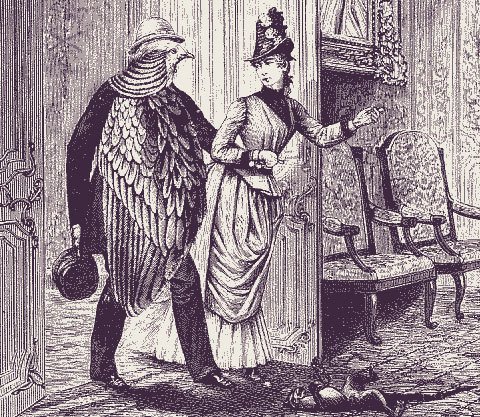
20090208_mudSmallbalancing-timeAweekofkindnessTumblr_kwo0tpbi3y1qzvd8go1_400

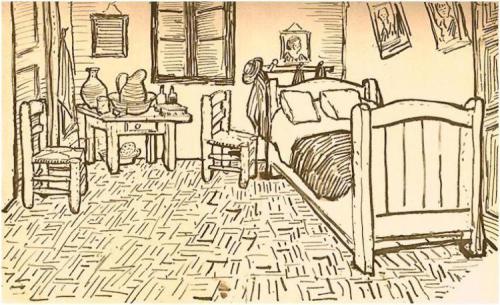
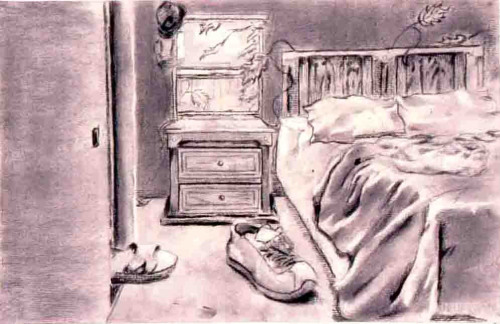
Examples that use hatching, cross-hatching, etc to create shading and a sense of depth.

Ink-drawing-of-the-bedroom-in-arles-1888

Student examples
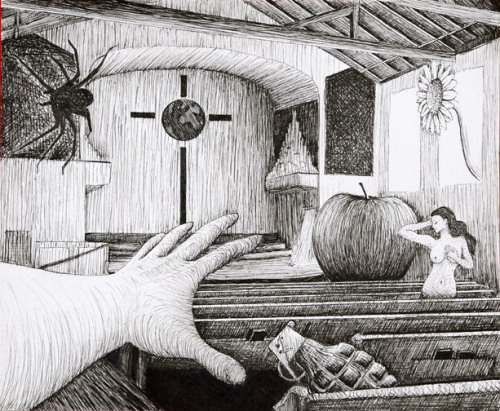
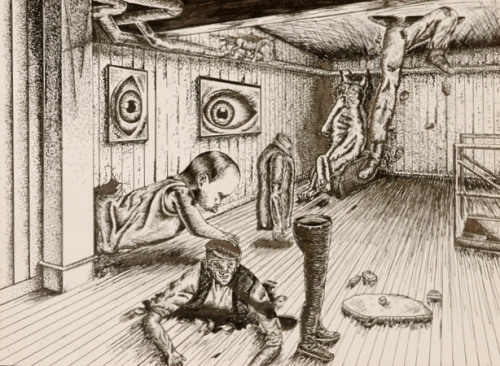
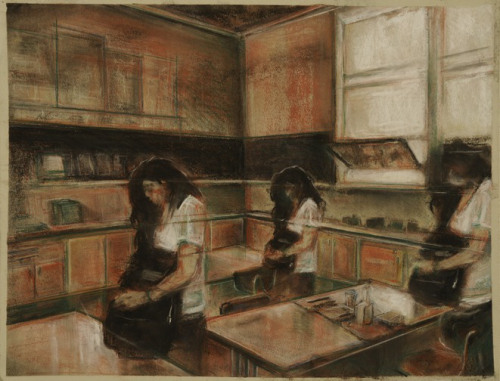
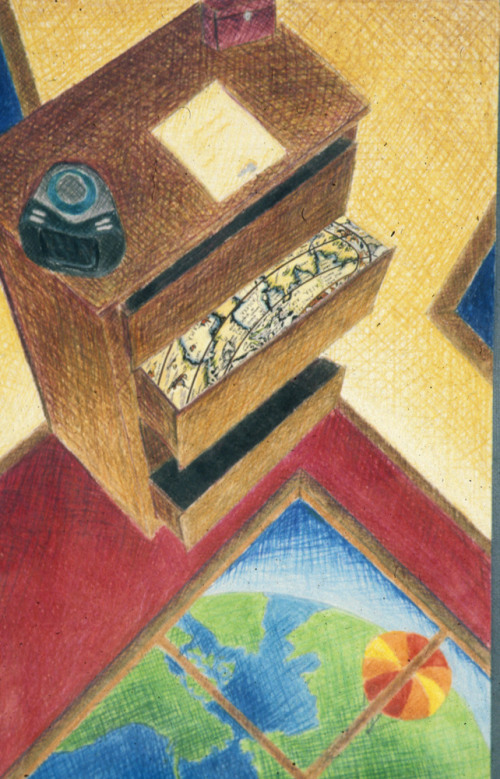
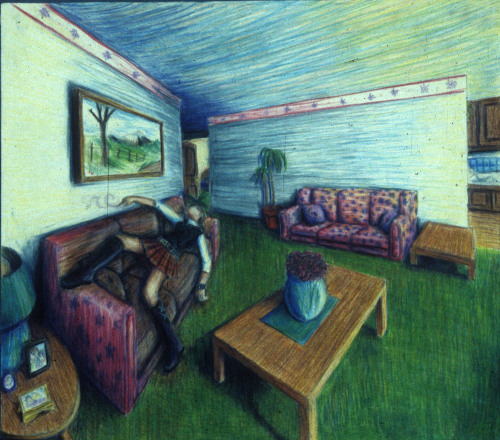
B-surreal_churchB-christian_surrealinteriorB-astronautxB_classroomKayleneDestiny_classroomSusana002Jackie02Brittney06Gail_classroomHai01Kim002B-contourderpdolphin

Vanessa07Brittney07Hai12B-hallway_w_ross
These AP student examples are in color and are completely random. Many of these are the surreal bedroom homework assignment.
B-jankleysurreal_green_bathroomB-perspectivewharehouseB-multiple_beccasLorraine010Ip73B-roomJennifer11B-surrealinteriorB-rossinteriorIp57B-surrealinteriorIp66Ip85Ip93Ip98B-jankleysurreal_room
HOW TO DRAW A ROOM IN PERSPECTIVE:
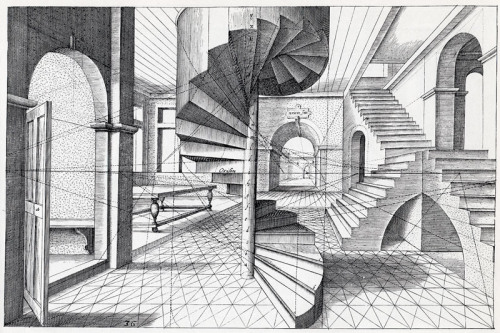
This isn’t easy and it takes a real understanding of how perspective works. First, you’ll need to figure out if your photo is in ONE OR TWO POINT perspective. I can help you with this, but the easiest way is to line up several rulers (or pencils or anything straight) along the horizontal receding lines in the photo, like the edge of the wall & ceiling. If they all line up with one point (which may be waaaaay off the edge of the paper), then it’s one point perspective. Or if they seem to be going in different directions, then it’s probably 2 point. BE SURE YOU KNOW WHICH YOU’RE DEALING WITH before you start your drawing!
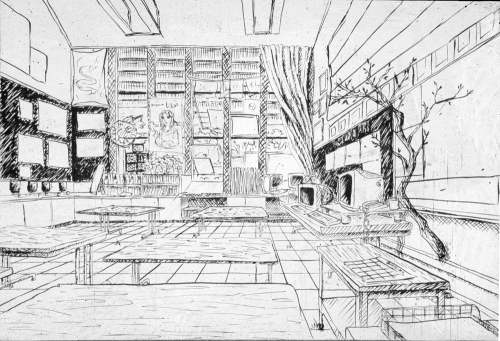
Below are some 2-point interior perspective samples- also simple, no surreal stuff… Just basic images that will help show you how to tackle 2-point perspective!
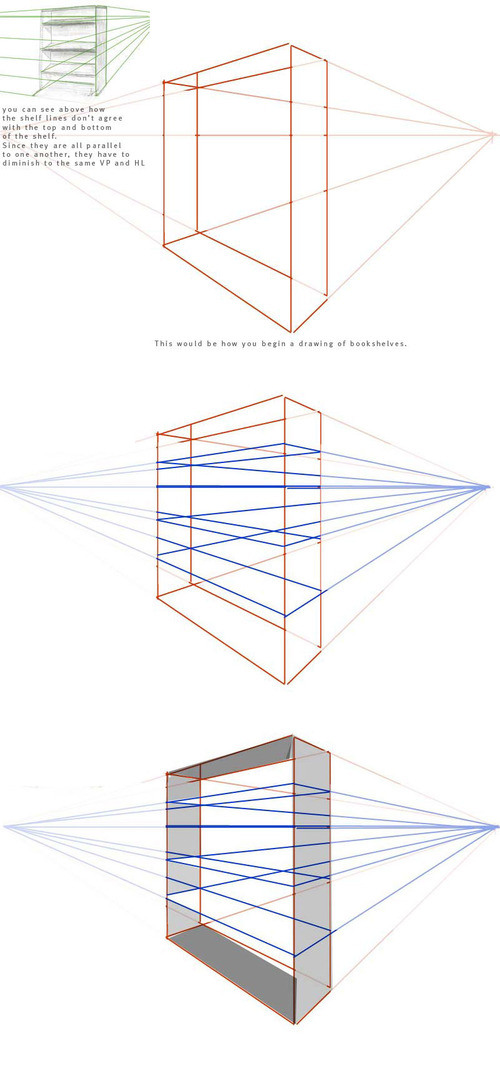
Bookshelves
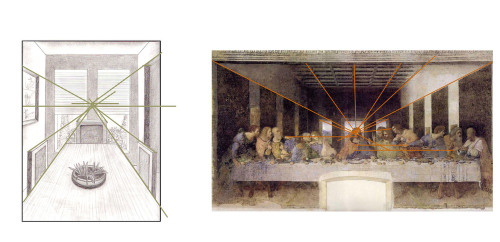
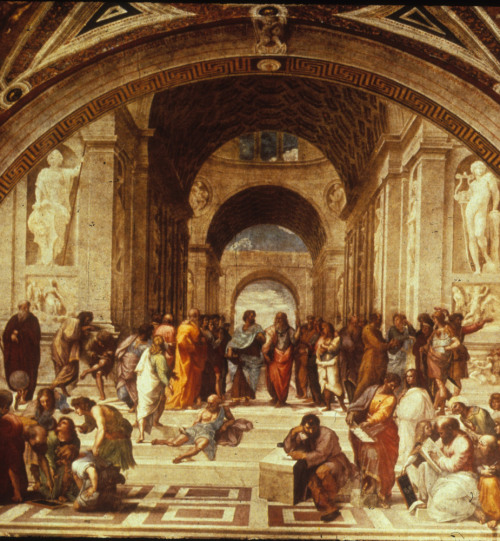
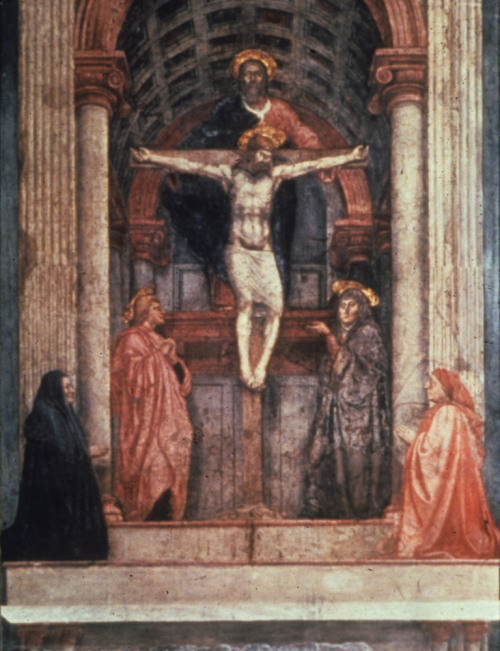
Some of the earliest and finest examples interior spaces using linear perspective. These examples also show you HOW to find the vanishing points in a photograph.
Interior_one_ptIp39Ip40Vredman_de_vriesIp41
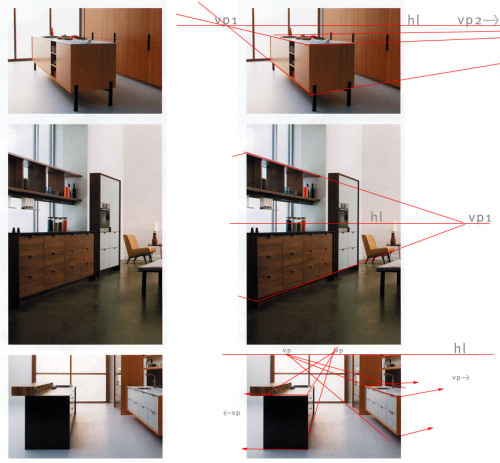
Here you can see how the vanishing points were found on a photo by lining up two or three lines going the same direction. I often do this using two rulers.
Vps_and_hls_interior
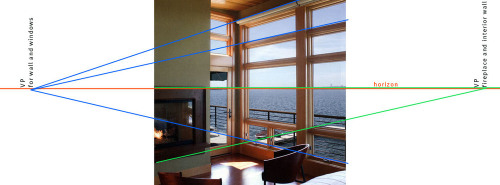
If you’re doing 2-point it’s often best if your vanishing points are FAR away from each other, even beyond the edge of the paper. Feel free to put them on the drawing board. Just be sure they’re level by using a yardstick to make a horizon line.
Horizonex2