
Wednesday, September 10, 2014

Tuesday, September 9, 2014
Storyboards
The Story Board
What is a storyboard?
Once a concept or script is written for a film or animation, the next step is to make a storyboard. A storyboard visually tells the story of an animation panel by panel, kind of like a comic book.Your storyboard will should convey some of the following information:

Why make a storyboard?
Creating a storyboard will help you plan your animation out shot by shot. You can make changes to your storyboard before you start animating, instead of changing your mind later. You will also be able to talk about your animation and show your storyboard to other people to get feedback on your ideas.

How do I make a storyboard?
Most commonly, storyboards are drawn in pen or pencil. If you don't like to draw you can also take photos, cut out pictures from magazines, or use a computer to make your storyboards. Keep in mind that your drawings don't have to be fancy! In fact, you want to spend just a few minutes drawing each frame. Use basic shapes, stick figures, and simple backgrounds. If you draw your storyboard frames on index cards, you can rearrange them to move parts of the the story around.
Storyboard Language
CLOSE-UP SHOT: A close range of distance between the camera and the subject.DISSOLVE: A transition between two shots, where one shot fades away and simultaneously another shot fades in. FADE - A transition from a shot to black where the image gradually becomes darker is a Fade Out; or from black where the image gradually becomes brighter is a Fade In. HIGH CAMERA ANGLE: A camera angle which looks down on its subject making it look small, weak or unimportant. JUMP CUT: A rapid, jerky transition from one frame to the next, either disrupting the flow of time or movement within a scene or making an abrupt transition from one scene to another. LEVEL CAMERA ANGLE: A camera angle which is even with the subject; it may be used as a neutral shot. LONG SHOT: A long range of distance between the camera and the subject, often providing a broader range of the setting. LOW CAMERA ANGLE: A camera angle which looks up at its subject; it makes the subject seem important and powerful. PAN: A steady, sweeping movement from one point in a scene to another. POV (point of view shot): A shot which is understood to be seen from the point of view of a character within the scene. REACTION SHOT- 1.: A shot of someone looking off screen. 2.: A reaction shot can also be a shot of someone in a conversation where they are not given a line of dialogue but are just listening to the other person speak. TILT: Using a camera on a tripod, the camera moves up or down to follow the action. ZOOM: Use of the camera lens to move closely towards the subject.
Storyboard Examples
From the Jane Animation Project - Hunting Sequence

A simple storyboard made using stick figures

A storyboard for a TV Western

More Links
Acting With A Pencil Famous Frames - Storyboards from Hollywood movies |
Perception of Forms and Forces
Goal Concept:
All visual fields are networks of interacting forces
Access Prior Knowledge:
“A painting speaks only when it is seen as a configuration of forces, generated by its various visual components.” ~ Rudolph Arnheim
New Information:
The Perception of Forms and Forces
Look at the square with the dot inside it.
It is perceived to be in the exact center because the dot interacts with an “invisible grid” - a psychological force field that is mentally projected to the figure. This psychological matrix is in the form of an “x” which connects the four corners of the square. Ultimately the visible and invisible elements lead us to the correct spatial determination of the dot.
The “invisible grid” is a psychologically projected matrix of visual forces which tells us the dot is in the center. The dynamic forces are equally balanced.
In every perceptive act, there is a similar coordinated effort of eye-brain action which scans and maps the forms and force fields involving thousands of subconscious measurements that determine the size, position, proportion and movement of visual elements.
> Think about parking a car, spiking a volleyball, catching a baseball, squeezing through anything, passing a soccer ball or skiing a mogal.
Apply Knowledge and Skills:
Studio Activity: Shapes and Forces
All visual fields are networks of interacting forces.
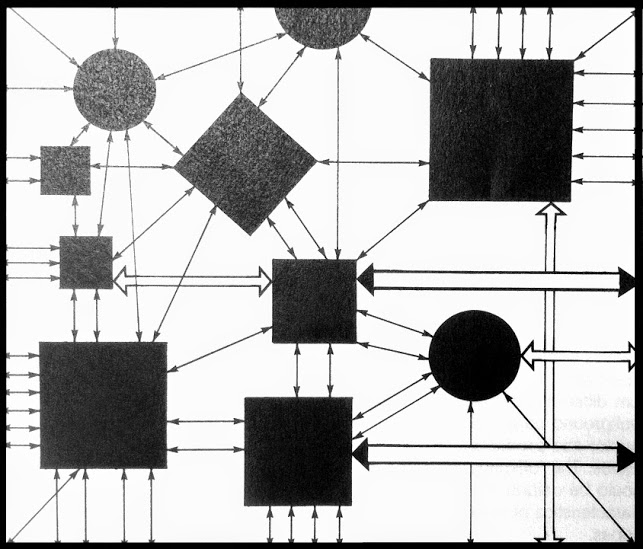 Create a collage-drawing abstract composition using geometric shapes (circles, squares, triangles...) Develop a design using one or more geometric shapes with repetitions and size variations. Cut ten or more shapes out of paper, then arrange and glue them inside of a square or rectangle. Arrange the shapes to create various relationships between the positive and negative spaces. Allow spaces to exist between the shapes, but do not overlap or have them touch.
Next, visualize the psychological forces in your picture. With a marker, draw the invisible forces on your picture. Use big arrows to suggest powerful forces, smaller ones to depict weaker tensions. There is no ‘right ’or ‘wrong’ way to do this exercise. In your own way, try to feel the invisible ‘push-pulls’ that seem to exist and fill the composition with symbolic arrows
Trigger Mechanisms:
Repeat, combine, animate
Materials:
paper, gluestick, ruler, compass, scissors, felt-tipped marking pens, templates
Studio Activity: Energy Encounter
different forcefields can be combined in a single plane of reference
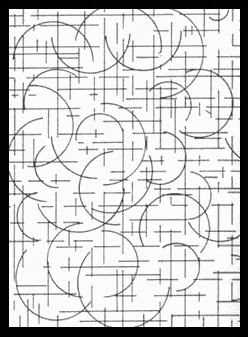
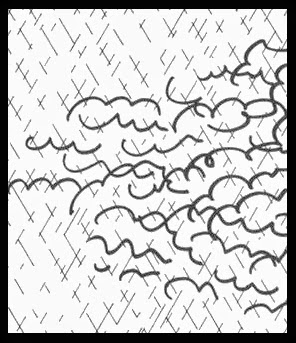 Imagine two different ‘teams’ of abstract shapes interacting in the same visual space. Symbolize each ‘team’ in a different way, ex, by straght, curved or dotted lines. With a sharpie marker “weave” the symbolic lines together to produce a gybrid energy texture.
Trigger Mechanisms:
Repeat, Combine, Superimpose, Animate
Materials:
paper, black marker
 Generalize, Publish and Reflect:
Instructional Strategy
- Providing Recognition
Learning Activity
- Promote > Share your album Public > (How to Screencast video link here)
- Publish > Share your album to Community
Notes
Instructional Strategy
- Providing feedback
Learning Activity
- Critique > Give positive feedback > +1 every image that deserves it
Notes
Blind Contour
The Blind Contour
Goal Concept:
Blind contour drawing improves eye-mind-hand coordination
Access Prior Knowledge:
Trigger Mechanisms:
Flow, peach, mindfulness, meditation consciousness
New Information:
The fovea is a small area of the retina at the back of the eye where the cones are packed tightly together. The fovea is responsible for our ability to focus and see details.
The remaining area of the retina is used for peripheral vision. Peripheral vision is necessary for our perception of a broad visual field.
The eye is full of muscles. The iris is a muscle that regulates the diameter of the pupil, making it small in bright light and large in dim lighting (to allow as much light as possible to enter the eye).
Muscles attached to the eye and connecting with the eye socket enable us to move our eyes up and down, left and right permitting us to scan a broad visual field without moving our heads.
Apply Knowledge and Skills:
Studio Activity 1: Blind Contour
- Find a visually complex object. Ex. flower, crumpled paper, open purse…
- Sit comfortably with a pen and paper taped to a board in front of your object.
- Close your eyes and become aware of yourself sitting in space.
- Relax and feel your butt on the seat.
- Continue to relax by taking deep, slow, sustained breaths.
- Mentally visualize stress leaving your body as your breath leaves your body.
- Now turn your attention to a time you were visually dazzled. (concert, sunset, gallery)
- Really sense the intensity of your total awareness at that time.
- Remember the awe of the total and undivided attention towards the spectacle.
- Permit that quality of seeing to dominate this exercise.
- When you feel that quality of ‘seeing’ relax to a deep breath and open your eyes.
- Fix your gaze to the object you have chosen and look at nothing else.
- Continue to look at the object, permitting your eyes to wander only over it.
- Look as if you are exploring the territory of the object.
- With your eyes staying fixed on the object, put pen on paper and allow it to move as your eyes move...your hand following your path of vision.
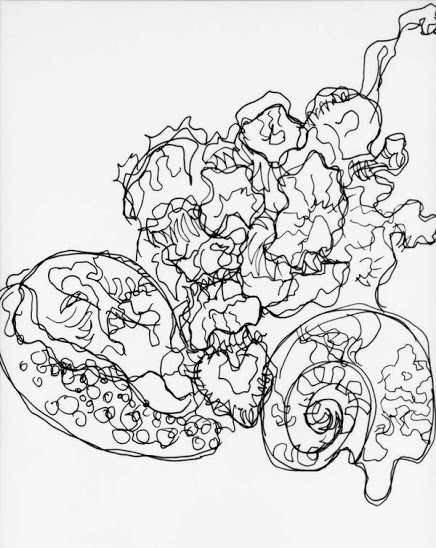
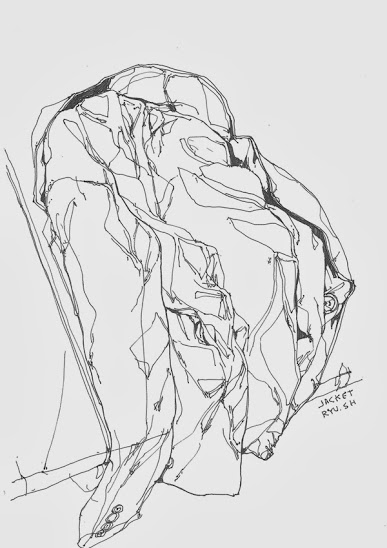
Studio Activity 2: Blind Peripheral Contour
1. do the opposit
Studio Activity 3: Scanning Exercises
Generalize, Reflect and Publish
Critique:
How did the time pass, were you able to stay focused?
Studies show that much of visual perception is learned and is subject to modification through learning. This means we can improve and expand visual perception. We can strengthen and sharpen our visual perception through exposure and exercise.
p. 8-11 Visual Literacy
Visualization
Visualization
Goal Concept:
Sharpening abilities to form mental images.
Access Prior Knowledge:
Trigger Mechanisms:
Visualize, Imagine, Fantasize
New Information:
Apply Knowledge and Skills:
Studio Activity: Visualization

- Look at the image of the black circle for one minute.
- Look away and close your eyes and image the black circle in your mind.
- Imagine the circle splitting in half vertically, producing two half circles
- Imagine the two black half circles suddenly turning a brilliant orange with white dots.
- Imagine the half-circles turning into the wings of a butterfly.
- Imagine a butterfly with wings of bright orange and white dots and a black shiny body.
- Imagine the butterfly flying away.
- Rate yourself: 1- Clear, 2- Vague, 3- A struggle
- With group, create an imagination exercise and share it with the community.
Critique:
Creative imagination operates by the interplay of several key functions;
Eidetics
Eidetics
Goal Concept:
Strengthening visual recall.
Access Prior Knowledge:
Imagination Triggers:
Visualize, Recall, Imagine
New Information:
People who use visual memory recall are termed eidetic.
They tend to produce memory images that are highly detailed and vivid.
The eidetic can ‘see’ images by simply closing their eyes.
Students often use eidetic powers to pass exams.
During the exam, students ‘mentally open’ their notes or textbook and ‘see’ notes and diagrams.
Eidetic recall, however, does not guarantee a creative intellect.
One must practice creative imaging (imagination) with visual recall.
Apply Knowledge and Skills:


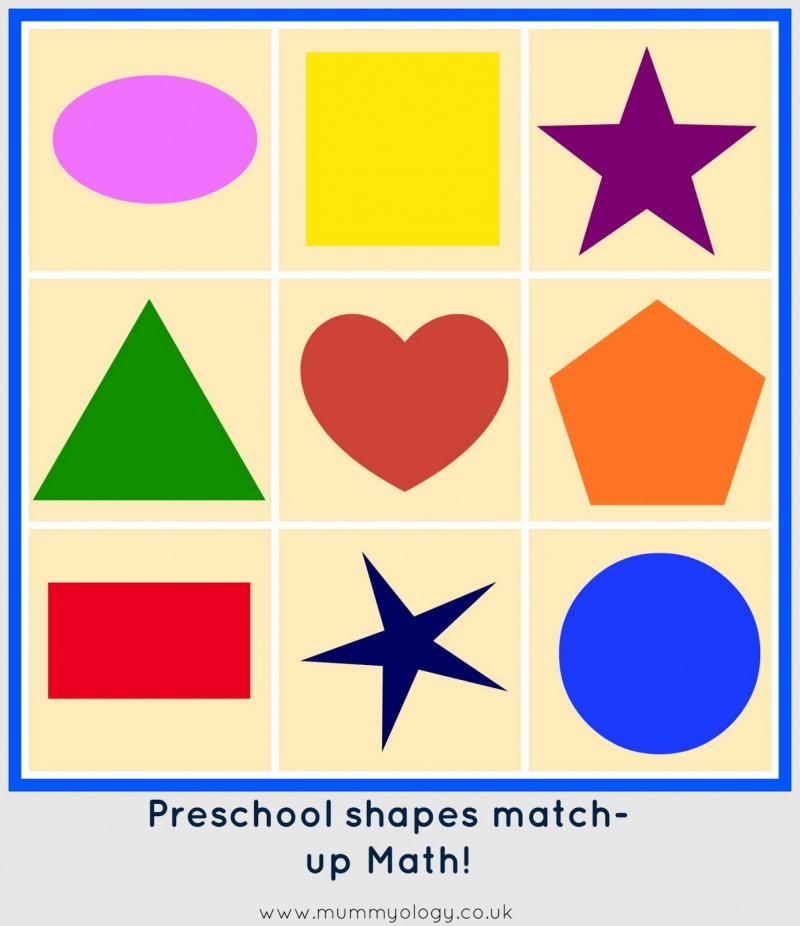
Challenge:
- Study the images on the grid above for one minute
- Look away or hide the image grid
- On a piece of paper draw the grid and the images in their correct positions.
- With a group, create a visual recall exercise of your own.
- Share your recall exercise with the community.
Generalize Reflect Publish:
People who use visual memory recall are termed eidetic.
They tend to produce memory images that are highly detailed and vivid.
The eidetic can ‘see’ images by simply closing their eyes.
Students often use eidetic powers to pass exams.
During the exam, students ‘mentally open’ their notes or textbook and ‘see’ notes and diagrams.
Eidetic recall, however, does not guarantee a creative intellect.
One must practice creative imaging (imagination) with visual recall.
Wednesday, May 14, 2014
Existential Bummer Socratic Seminar

Instructional Strategy
- Cues and Questions
Learning Activity
Social Dialogue >
- Watch > Silva, Existential Bummer
- Respond > to the questions in the comment section:
In the video, Jason Silva says,
"We defy entropy and impermanence with our films and our poems...
I will not let go...I will extend it forever..."
In the comment box, respond to the following:
- What is he trying to say? Why do people make photos, films, poems, etc...
- Will you still let yourself fall in LOVE? Why?

Subscribe to:
Posts (Atom)