Thursday, February 11, 2016

Create > OCD Patterns

Create > OCD Patterns


Goal:  Create images by organizing subject matter into patterns.

Studio Activity:
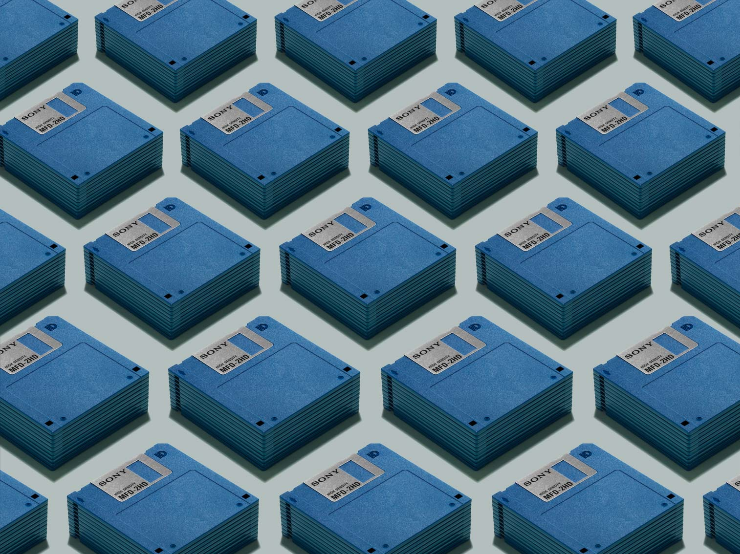
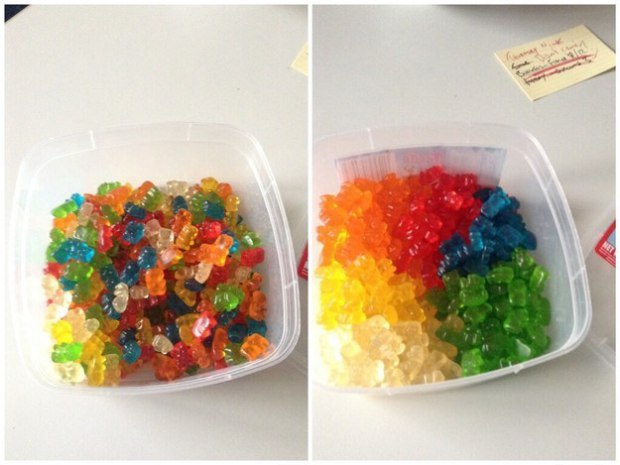
Be inspired by the work of Jim Golden > http://goo.gl/p18fNo.  Jim Golden purchases obsolete technology at yard sales and thrift stores and to arrange them into dramatic patterns reminding us of our progress and temporary nature.  Be the picture director.  Photography students often get caught up in finding a perfect scene or moment before they push the shutter button, completely forgetting that they have direct compositional control.  Objects or scenes can be deliberately arranged and composed, creating meaningful installations or repeating patterns.  Placing hundreds of near identical objects next to each other forces viewers to confront figure ground relationships and compare and contrast patterns and differences.  

Trigger Mechanisms: Arrange, Repetition, Organize

Visual Examples:


Generalize, Reflect & Publish:
Instructional Strategy
  • Evaluate the results
Learning Activity
Reflect > Should I go back and rework anything?
  • How did you combine art elements (line, color, shape, texture, value)  to develop art principles? (Unity/variety, balance, emphasis contrast, rhythm, proportion/scale, figure/ground relationship)
  • Where are the dominant shapes, forms, colors, or textures that carry expressive significance?
  • Why Is the work ordered and balanced or chaotic and disturbing?
  • What gives the work its uniqueness?
  • Is symbolism used in the work to convey meaning other than what one sees?
  • Does the work evoke any feelings?

Instructional Strategy
  • Providing Recognition
Learning Activity
Publish > Share your album to our G+Community > Concepts & Creations category
Display > Add your photos to the Event

Instructional Strategy
  • Providing Feedback
Learning Activity
Critique >
  • Give positive feedback > +1 every image that deserves it
  • Give peer feedback > Give 2 peer images a VTS critique > http://goo.gl/1WWmBY
Self-assess >
Life Skills Survey > http://goo.gl/iEUqr (responses > http://goo.gl/8YDnYF)


Friday, February 5, 2016

Create > Photos of Submerged Things

Create > Photos of Submerged Things

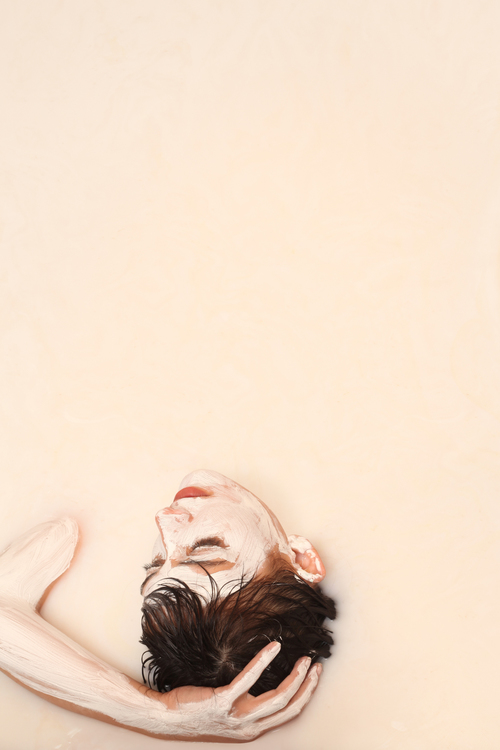
milk bath photography

Goal:  Create a series of photographs of objects partially submerged in liquid.

Studio Activity:
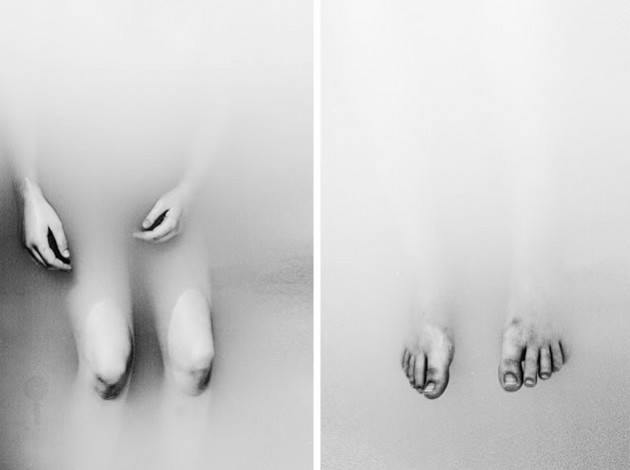
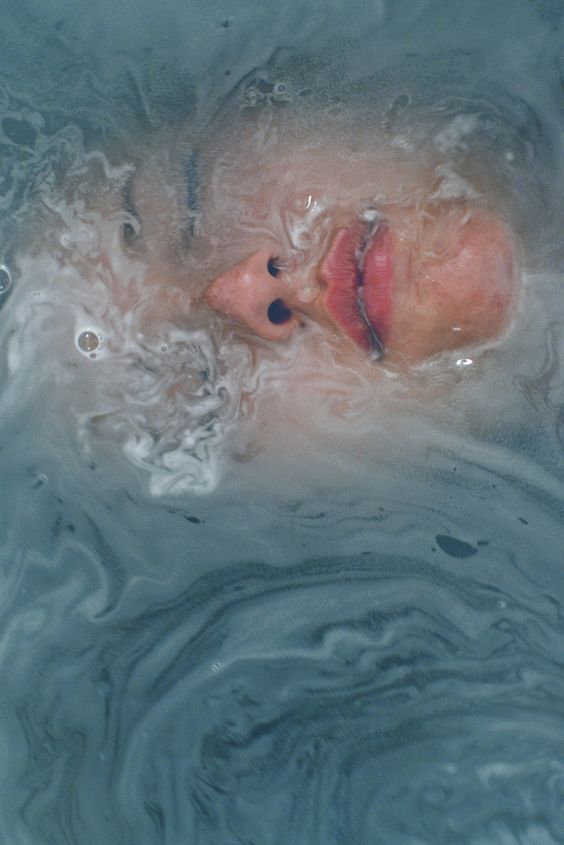
Be inspired by the works of Rosanna Jones.  She photographed things submerged in colored liquid or milk bath.  The images above show a figure lying in a lukewarm bath of powdered milk. This results in beautiful, semi-translucent, ghostly images, with dramatic focal areas and a high-key effect.  Experiment with the liquid by dropping things as you shoot.  Or have things floating while others are submerged.  Exploit the distortion the water creates on things below the surface.

Trigger Mechanisms: Manipulate, Distort, Mystery

Visual Examples:

HESITATE, 2012 160x80 cm, Edition of 3 | 50x100 cm, Edition of 5 | 75x37.5 cm, Edition of 7

Head Trip in process

HEAD TRIP, 2012 100x100 cm, Edition of 3 | 75x75 cm, Edition of 5 | 50x50 cm, Edition of 7

Hesitate // Activate in process Photo by David Branson

ACTIVATE, 2012 100x100 cm, Edition of 3 | 75x75 cm, Edition of 5 | 50x50 cm, Edition of 7

WHITE OUT, 2012 160x106 cm, Edition of 3 | 100x66 cm, Edition of 5 | 75x50 cm, Edition of 7

Generalize, Reflect & Publish:
Instructional Strategy
  • Evaluate the results
Learning Activity
Reflect > Should I go back and rework anything?
  • How did you combine art elements (line, color, shape, texture, value)  to develop art principles? (Unity/variety, balance, emphasis contrast, rhythm, proportion/scale, figure/ground relationship)
  • Where are the dominant shapes, forms, colors, or textures that carry expressive significance?
  • Why Is the work ordered and balanced or chaotic and disturbing?
  • What gives the work its uniqueness?
  • Is symbolism used in the work to convey meaning other than what one sees?
  • Does the work evoke any feelings?

Instructional Strategy
  • Providing Recognition
Learning Activity
Publish > Share your album to our G+Community > Concepts & Creations category
Display > Add your photos to the Event

Instructional Strategy
  • Providing Feedback
Learning Activity
Critique >
  • Give positive feedback > +1 every image that deserves it
  • Give peer feedback > Give 2 peer images a VTS critique > http://goo.gl/1WWmBY
Self-assess >


“Water does not resist. Water flows. When you plunge your hand into it, all you feel is a caress. Water is not a solid wall, it will not stop you. But water always goes where it wants to go, and nothing in the end can stand against it. Water is patient. Dripping water wears away a stone. Remember that, my child. Remember you are half water. If you can't go through an obstacle, go around it. Water does.” ― Margaret Atwood, The Penelopiad:

 :

Topic: Design is Order

Topic: Design is Order

Studio Activity 1:
Create >  Organizational Geometrics
Studio Activity 2:
Create >  Design by Chance

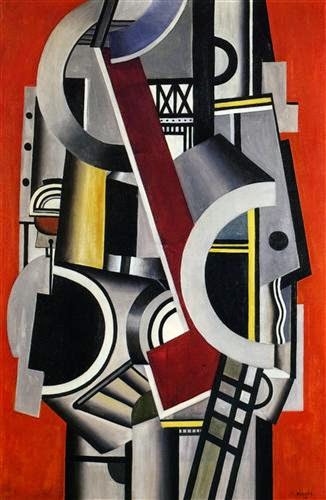
machine-element-1924.jpg!Blog.jpg

The Big Ideas:
A system is a structure of interacting, intercommunicating components that operate individually and jointly to achieve a common goal.  

Designing is creating conceptual and visual unity by giving order to diverse but interrelated and interdependent parts.

Standards:
As an art student, I will understand and demonstrate the ability to...
  • Understand and apply media, techniques, and processes with skill and confidence
  • Use design principles and functions to accomplish specific visual art problems
  • Choose and evaluate subject matter and ideas
  • Reflect upon and assess the characteristics and merits of my work
  • Make connections between my art and other aspects of life

Goal Concept:
Artistic activity involves conceptual, visual and psychological order.

Access Prior Knowledge:
“There is no work of art without a system.” ~ Le Corbusier

Dialogue > Le Corbusier on Art

New Information:

Design
The term design can be used either as a noun or as a verb.  Design can refer to either an object or an action.  As a noun, it can denote a plan, a drawing or a representation.  As a verb it can refer to a way of thinking and doing or a way of applying organizational principles, or of endeavoring to achieve a conceptual and aesthetic gestalt.  John Ruskin said, “Design is not the offspring of idle fancy; it is the studied result of accumulative observation.”

A good design must have a strong foundation or underlying formal order behind its visual content.  To emphasize this, painter Christopher Pratt said, “A work of art has to stand on its own merits which are independent of its source.  A geometric structure should be engineered, stressed, proportioned, calculated, and balanced with the same care we would bring to the design of a bridge or the cutting of a diamond.”
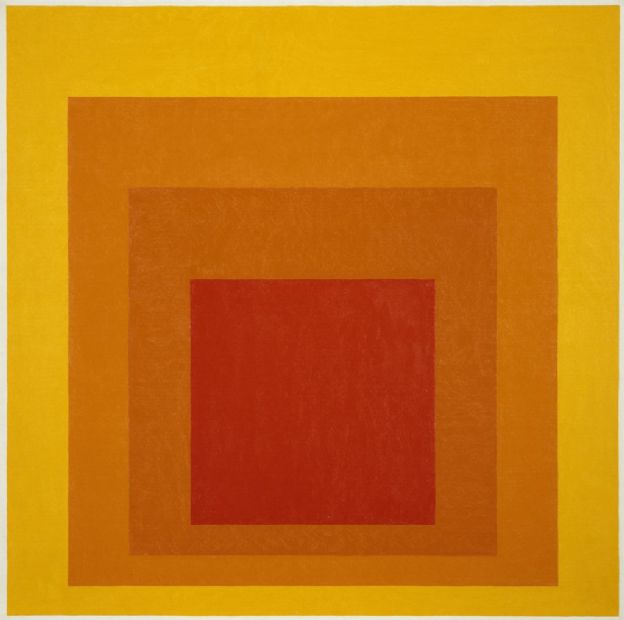
02-albers_notext.jpg
Master teacher Joseph Albers wrote a poem about design.

To design is
to plan
and to organize
to relate and to control.
In short it embraces
All means opposing disorder
and accident.
Therefore it signifies
a human need
and qualifies man’s
thinking and doing.


Artist Reference:
basic_shapes_3rds.jpg
Instructional Strategy
  • Identify > Similarities & Differences
Learning Activity

Apply Knowledge and Skills:
Studio Activity 1:
Create >  Organizational Geometrics
DSC_0646.JPG
Goal: Create a well organized composition by substituting geometric shapes and form for figurative images.  

Studio Action: Go to  the Art Institute Chicago’s Modern art online > http://goo.gl/63vdFJ and select a reproduction of a representational art work.  Analyze the work and seek out the dominant principles of design (unity/variety, balance, emphasis, contrast, rhythm, proportion/scale, figure/ground)Reinterpret the composition using only geometric and free form shapes in place of the original figurative images.  Maintain the compositional order and proportions of the original work but feel free to manipulate the shapes and forms with value ranges, textures, patterns and colors. View the process here > https://goo.gl/photos/x17SvX4ZrnHBEwoVA  

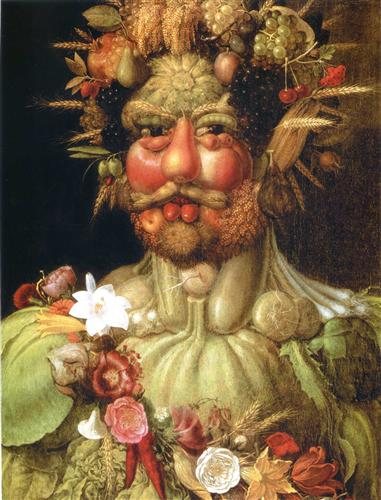
Alternate Studio Action > If accurate rendering is what you want to do, this studio activity’s goal can still be achieved by doing something similar to the works of Giuseppe Arcimboldo.  View his works here > http://goo.gl/Uxh37p
Trigger Mechanisms:
Abstract, repeat, transform

Materials:
Paper, paint, markers, mix-media

Studio Activity 2:
Create >  Design by Chance
the-snail-1953.jpg!Blog.jpg
Goal: Create a random ordered design using serendipitous or chance methods.

Studio Action: Cut and tear colored construction paper into various geometric and organic shapes.  Without consciously controlling the placement, drop the shapes, one by one, onto a larger sheet of paper.  Glue the pieces exactly where they fell.  Repeat the procedure until all of the shapes are attached to the surface.

Next, make an adjustable viewfinder by cutting out two “L”-shaped pieces of tagboard and clipping them together.  With the  viewfinder, search the collage for an aesthetically pleasing composition.  
Finally, replicate the collage composition in the form of a painting.  The goal is to match the shapes, colors, tones and textures of the collage as accurately as possible.

Trigger Mechanisms:
Combine, transfer, render
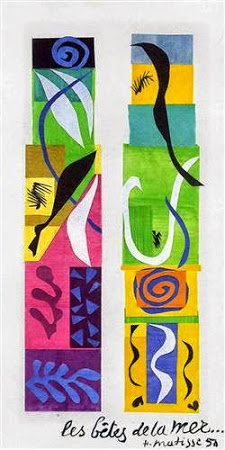
the-maritime-wildlife-1950.jpg!Blog.jpg
Visual examples
Matisse Gallery Walk Through > http://goo.gl/1z4SgW video > http://goo.gl/DMUI0l

Materials:
Paper, pencil, paint, viewfinder
Destiny_classroom
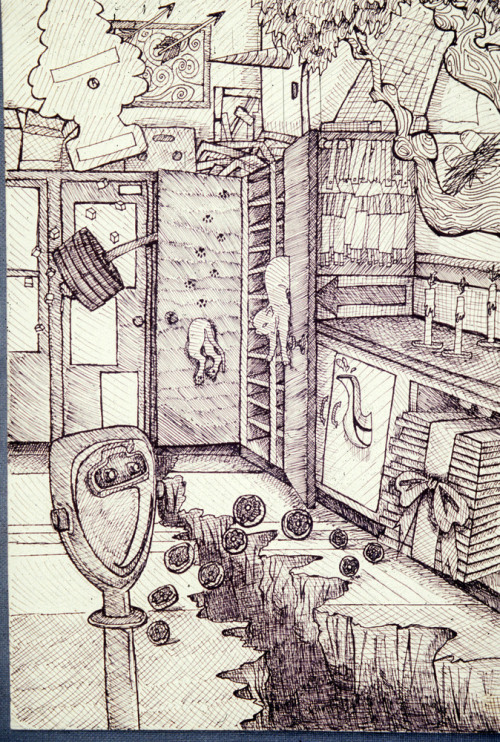
  1. *Alternate Studio > If accurate rendering is what you want to do, this studio activity’s goal can still be achieved by doing something similar to the works of the surrealist artists of the 1920’s.  Take a photo of an interior room or find one and print it out.  Next cut out and or print images of random subject matter.  Shake and drop the cut-outs onto the interior print out.  Take a picture of your chance design and draw the image.  View examples here > http://goo.gl/jTjgLA collage will NOT go in your portfolio, it’s just a guide for your drawing.

“The details are not the details.  They make the design.” ~ Charles Eames

Generalize, Reflect & Publish:
Instructional Strategy
  • Evaluate the results
Learning Activity
Reflect > Should I go back and rework anything?
  • How did you combine art elements (line, color, shape, texture, value)  to develop art principles? (Unity/variety, balance, emphasis contrast, rhythm, proportion/scale, figure/ground relationship)
  • Where are the dominant shapes, forms, colors, or textures that carry expressive significance?
  • Why Is the work ordered and balanced or chaotic and disturbing?
  • What gives the work its uniqueness?
  • Is symbolism used in the work to convey meaning other than what one sees?
  • Does the work evoke any feelings?

Instructional Strategy
  • Providing Recognition
Learning Activity
Publish > Share your album to our G+Community > Concepts & Creations category
Display > Add your photos to the Event

Instructional Strategy
  • Providing Feedback
Learning Activity
Critique >
  • Give positive feedback > +1 every image that deserves it
  • Give peer feedback > Give 2 peer images a VTS critique > http://goo.gl/1WWmBY
Self-assess >
Create > Unnatural Silhouettes Album

Create > Unnatural Silhouettes Album


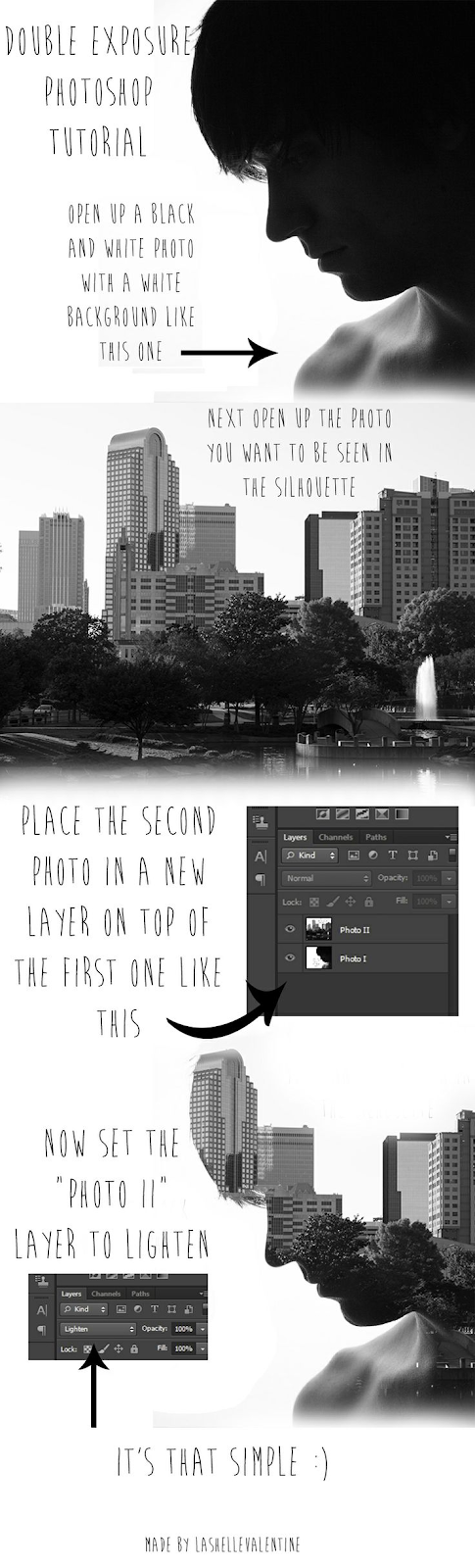
Goal:  Make three (3) double exposure silhouette images

Studio Activity:
  • Stage a series of images that emphasize silhouette shapes.  
  • Capture other images that metaphorically represent the individual in the silhouette image.
  • Follow the tutorial below to exploit a double exposure effect.

Trigger Mechanisms:  Contrast, Metaphor, Analogy

Visual Examples:

Tutorial:  

Unnatural Silhouettes
Click > The Official site button for the full lesson


Monday, February 1, 2016

Create > Projection Mapping Profile Portrait Photo Breadth

Create > Projection Mapping Profile Portrait Photo Breadth


Goal: Create a profile portrait emphasizing identity through the use of projected imagery.  

Studio Activity:
Projecting mapping images across a 3D from creates a double scene.  The projected image becomes distorted and obscured as it falls within shadowed crevices and bends around the 3D from.  Projecting images onto people is a great way to experiment with topics of identity and portraiture.  
  • Project relevant imagery from an LCD projector onto your face.
  • Search for imagery pertaining to your identity
    • a map of your neighborhood
    • images of horses or the woods
    • lyrics to a song
    • abstract digital art
  • Capture close ups of your face along with the projected imagery from the LCD
  • Manipulate and enhance the images
  • Save them to a new G+ Album title  and use it as your G+ profile pic.

Trigger Mechanisms: Distort, Manipulate, Dynamic gesture, Multi-dimensional  

Visual Examples:


Car%2BProjection%2BMapping%2Bby%2BRadugadesign.gif