Wednesday, September 9, 2015

Understand > A Shift from Verbal to Spatial Consciousness

Understand > A Shift from Verbal to Spatial Consciousness

Access Prior Knowledge:
“If you gotta ask what jazz is, you ain’t never gonna know.”  -Fats Waller.
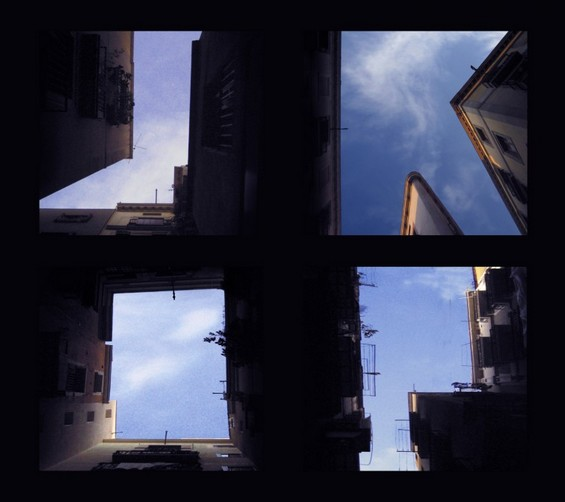
View > Lisa Renermann’s Type the Sky Series > http://goo.gl/vqHs0Q


New Information:
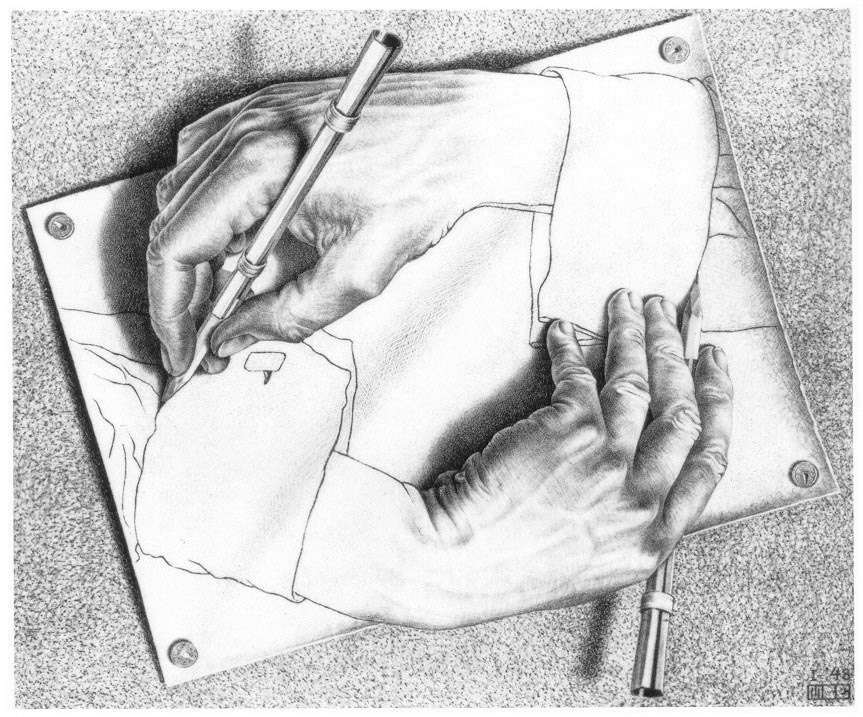
Betty Edwards is an art professor that wrote Drawing on the Right Side of the Brain. The book was a result of her PhD research investigated the psychology of perception and drawing based on the Nobel prize-winning work into the ‘split brain’ by Roger Sperry, begun in the late 1960s. In brief, Edwards teaches her students to draw by switching into ‘R mode’ (non-verbal) instead of ‘L mode’ (usually the more dominant, language-based hemisphere of the brain).
Edwards quotes Paredes and Hepburn (1976) to illustrate the two broad ways of perceiving the world. These researchers cite the example given by anthropologist, Thomas Gladwin, which contrasts the approach taken by European and native Trukese sailors to navigating between the small islands dotted in the huge Pacific Ocean.


Before setting sail, the European begins with a plan that can be written in terms of directions, degrees of longitude and latitude, estimated time of arrival at separate points on the journey. Once the plan is conceived and completed, the sailor has only to carry out each step consecutively, one after another, to be assured of arriving on time at the planned destination. The sailor uses all available tools, such as a compass, a sextant, a map etc, and if asked, can describe exactly how he got where he was going.

In contrast, the native Trukese sailor starts his voyage by imaging the position of his destination relative to the position of other islands. As he sails along, he constantly adjusts his direction according to his awareness of his position thus far. His decisions are improvised continually by checking relative positions of landmarks, sun, wind direction, etc. He navigates with reference to where he started, where he is going, and the space between his destination and the point where he is at the moment. If asked how he navigates so well without instruments or a written plan, he cannot possibly put it into words. This is not because the Trukese are unaccustomed to describing things in words, but rather because the process is too complex and fluid to put into words.

The European style worked just fine, as long as nothing unexpected happened (like a sudden storm or killer whales). However, for most people, and certainly most organisations now, life just doesn’t work that way. The ‘left-brained’ logical approach has its place. But people tend to forget to use their whole brains in navigating challenges.
It seemed to me that the right-brained approach of the Trukese sailors is a great metaphor for creative problem-solving. It also provides a very neat description of leadership, and a great way for me to explain my approach to teaching. Oh yes, and it also helps you draw.

Goal Review:

Respond > In the comment section explain your ‘takeaway’. How is this life improving?

Create > Upside Down Drawing
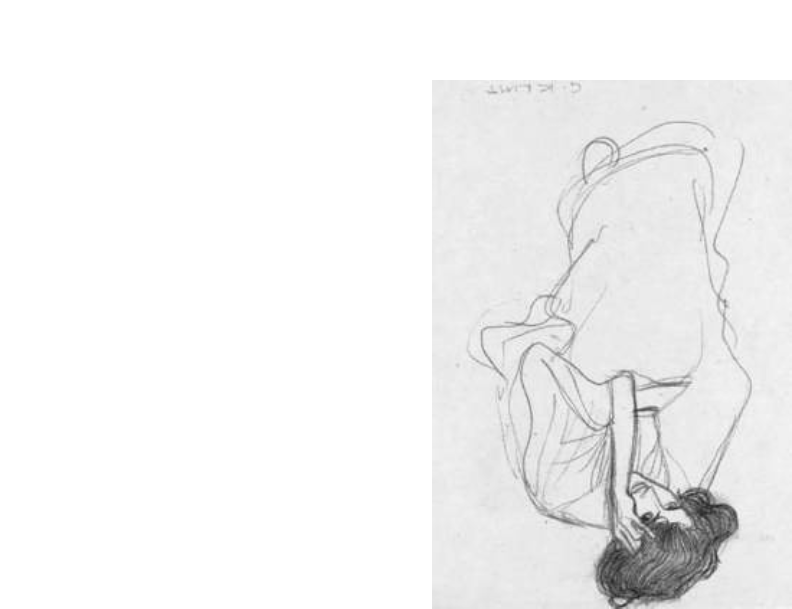
Gustav Klimt 1907 “Adele Bloch-Bauer I”

Goal: Create a mindful switch from the verbal to the spatial state of consciousness.

Studio Activity:
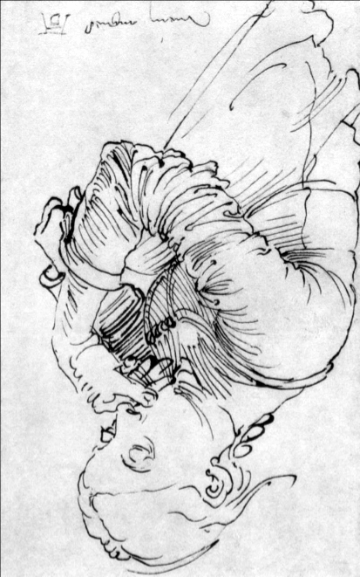
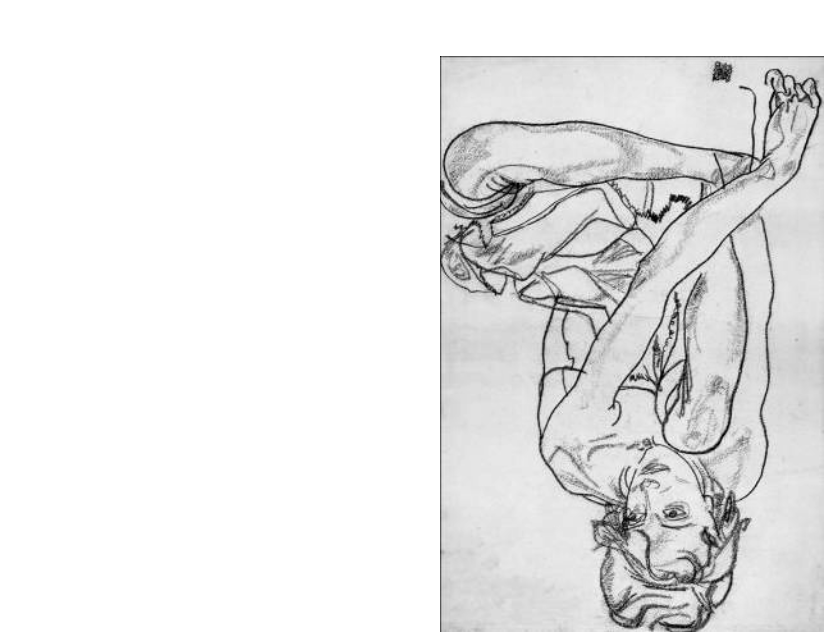
Understand, that by inverting an image, forms become unrecognizable and ‘nameless’.  this turns down the dominant verbal state of thinking (you don’t name things) and allows the spatial state greater moment to moment awareness.  The spatial state of awareness like mindful meditation induces positive and satisfying emotional consciousness that lasts long after.
  1. Prepare with a  blank page, a pencil and the image I give you.
  2. Take a deep breath and prepare not to speak for 30 minutes.
  3. Turn the image upside down and like Trukese sailor navigate by constantly checking and rechecking visual qualities.  For example; this line goes up and to the left, starting halfway down the middle of the page and ending near the upper left edge of the paper.
  4. Do not speak or attempt to name things.

Trigger Mechanisms: Awareness, Silence, Observation

Goal Review:
Publish > your drawing to our G+Community > Concepts & Creations category
Respond > in the comment section write the following reflection.
  • Obviously you can’t always turn things upside down (models, still lifes or landscapes) so your goal is to be able to look like an artist.  What will that take?

Visual Examples:
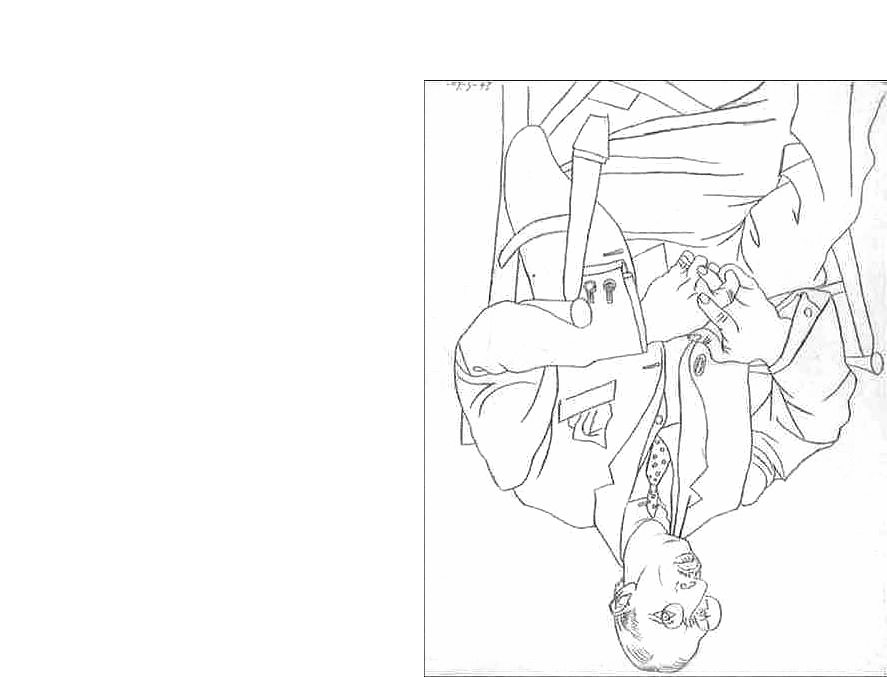
Pablo Picasso. Portrait of Igor Stravinsky. 1920. Graphite and charcoal. Musée Picasso, Paris, France
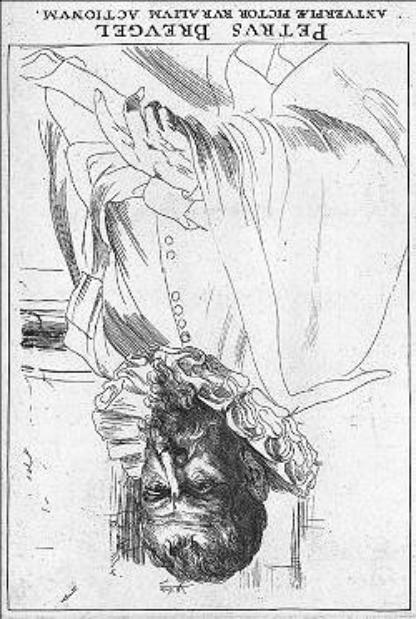
Pieter Brueghel the Younger from theIconography; etching by Van Dyck

Albrecht Durer
My Agnes
Egon Schiele
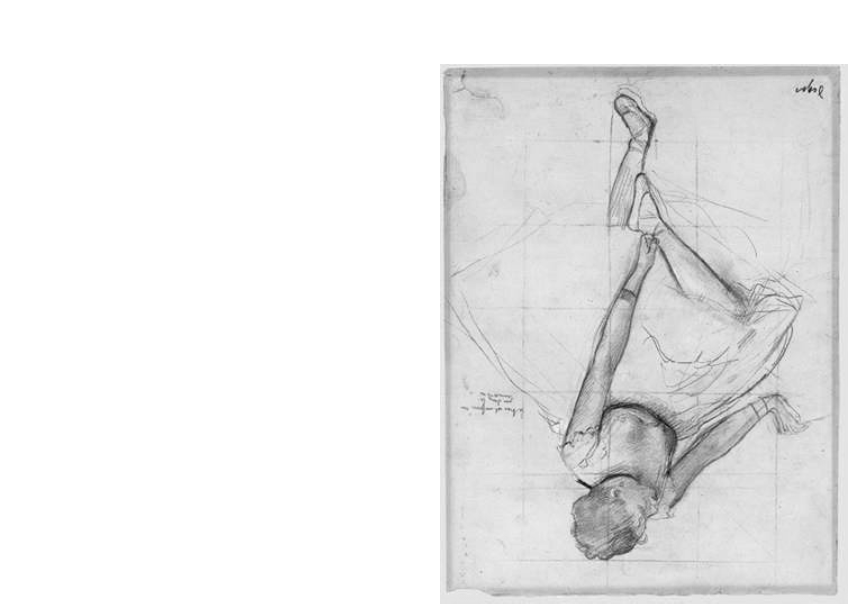
Edgar Degas
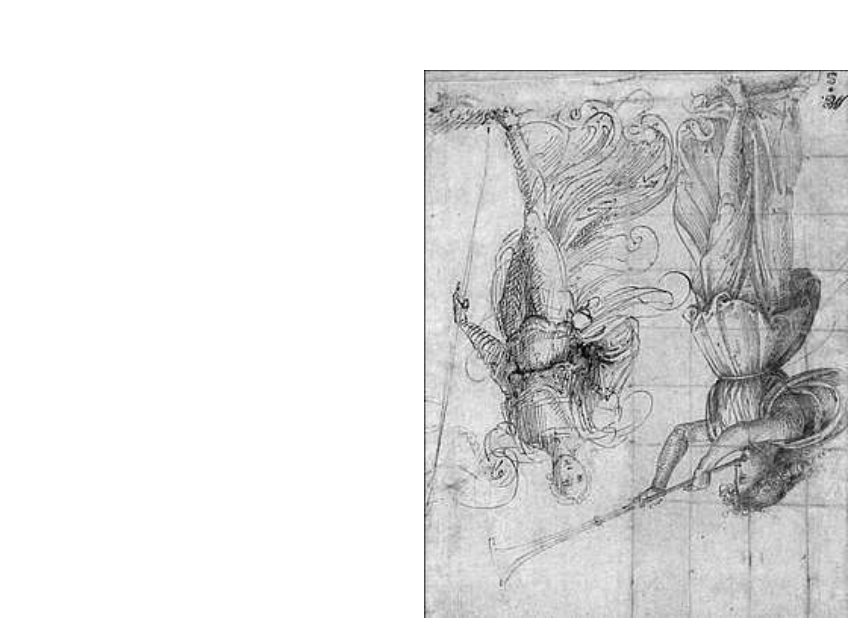
Botticelli


Understand > Visual Awareness

Understand > Visual Awareness

Access Prior Knowledge:
15%2B-%2B1

New Information:
Visual literacy begins with visual awareness.  To become visually aware, we first must understand the physiological means by which we receive visual messages.  

Neurophysiology, perception psychology, and ophthalmology are professions seeking further understanding of how we see.  

It is estimated that visual perception comprises 75% to 80% of our sensory input.  In addition, of our visual perception, about 10% is in the eye and 90% is mental.

Psychologists of perception maintain that much of visual perception is learned and it is subject to modification through learning.  This means that we can improve and expand visual perception.  We can strengthen and sharpen it through exposure and exercise.

When learning a new skill, it is part of the training to strengthen relevant muscles and improve coordination.  The following exercises strengthen and sharpen our visual muscles.  

Respond > In the comment section paste the topic sentence and explain your reasoning.

For the ADV Learner > The Paradox of Active Surrender: Jeanette Winterson on How Learning to Understand Art Transforms Us > http://goo.gl/ZBzrvL    


Extra Resources:
Eye/Brain Physiology & Human Perception > http://goo.gl/YZw3AX
The Human Eye > http://goo.gl/v34mU
Visual Perception > http://goo.gl/Yw9F0
Slideshow: Perception: How We See > http://goo.gl/qNbxK0
Video: Scott Fraser: Why eyewitnesses get it wrong > http://goo.gl/FqGA5

Apply Knowledge and Skills:

Create > Witness Description Drawing


Goal: Develop a verbal language of description to improve drawing accuracy

Studio Activity:
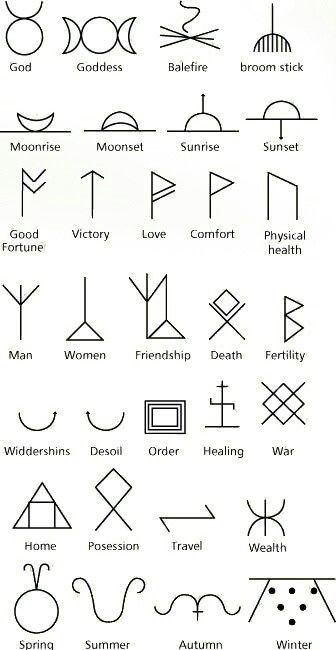
Pair up.  One person is the ‘witness’ the other is the ‘police sketch artist.’  The witness must describe the formal line qualities and the spatial relationships of the symbol given to them using descriptive words, such as, up and to the right, curved down and to the left.  The sketch artist must try and accurately render the symbol being described.  Ancient symbols > http://goo.gl/RSSLJY  Hobo symbols > http://goo.gl/0D1G4F

Goal Review:
Publish > your witness drawing to our G+Community > Concepts & Creations category
Respond > in the comment section explain why the following statement is true or false.
  • Your ability to verbalize a description of an image or visual setting will aid you in expressing that image in forms using visual medias.


Understand > The Happy Secret

Tuesday, September 8, 2015

About Digital Photography

About Digital Photography


Required:
Complete > everything highlighted in yellow.


Pre-instruction Baseline Data:
Instructional Strategy
  • Focus the learning
Learning Activity


The Big Idea:
Photography communicates in a complex language and makes us artists.


Essential Questions:
  • How do I get the most out of my camera?
  • How do I capture content and make impactful images?
  • Where do I store, share and communicate with my images?


Concept:
Digital photography is allowing more individuals to capture moments and make images.  No longer burdened with expensive cameras, film and developing process, individuals with mobile phones, cameras and computers can point and shoot and make unlimited amounts of images.


Standards:
  • Understand and apply > media, techniques, and processes with skill
  • Use design > principles and functions
  • Choose and evaluate > subject matter and ideas
  • Reflect upon and assess > the characteristics and merits of both mine and other’s work
  • Make connections > between my art and other aspects of life


Goals: Know how to direct for and control pictorial design and composition
Instructional Strategy
  • Setting Objectives
Learning Activity
Focus the Learning Targets > Grading Buckets Rubric > http://goo.gl/6n9Lw


New Information:
Instructional Strategy
  • Summarizing and Note Taking
Learning Activity


View > Design Great Pictures > https://goo.gl/crL4hV


Apply Knowledge & Skills:
Instructional Strategy
  • Practice
Learning Activity
Analyze > Radioactive Cats VTS Image Analysis > http://goo.gl/H8lfNW  

Instructional Strategy
  • Practice
Learning Activity
Create > Central Photo Scavenger Hunt - https://goo.gl/dAWCSp


Generalize, Reflect & Publish:
Required Work Checklist:

Friday, September 4, 2015

Understand > Drawing is about Observation

Understand > Drawing is about Observation

Access Prior Knowledge:
“Learning to draw is really a matter of learning to see – to see correctly – and that means a good deal more than merely looking with the eye.”  -Kimon Nicolaides.

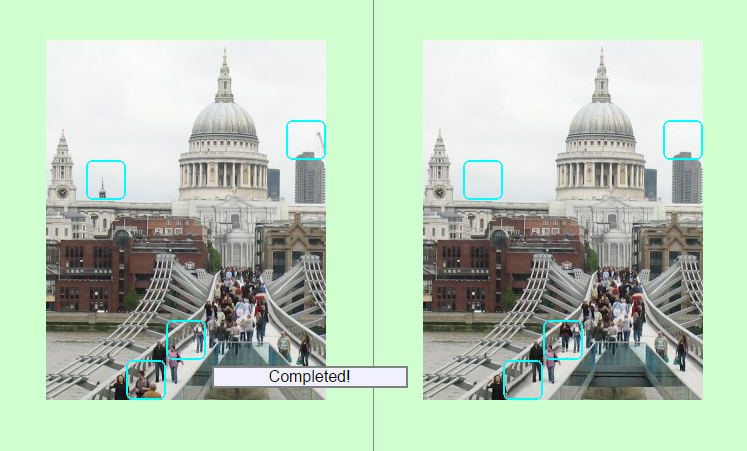
Play > Spot the Difference > http://www.spotthedifference.com/

New Information:
Drawing is about observation, about dismantling what you are looking at into the lines that make it up, and then recording those lines, one after the other, on a piece of paper.


That’s how a computer program works, zillions of tiny steps performed in the right order at the speed of light.  A Beethoven symphony?  Just read every note from the overture to the finale.  French cooking?  All you need is a clear step-by-step recipe.  Drawing works the same way.

Most anything you draw is made up of straight lines and curves and organic squiggles.  You can draw a short, reasonably straight line.  And with a little care you can draw an arc or a fairly round circle.  To improve your accuracy, just slow down.  And practice will make you better.  And as for the squiggles, well, they’re just squiggles.


But you don’t want to just learn to draw lines and arcs, any more than you want a lesson on how to boil water or how to play a single note on the piano.  It’s putting all those parts together that makes the idea of drawing satisfying and challenging.  But that’s all it is - a challenge, not an impossibility, no matter who you are.

The key to success in this course is to flip a switch that helps you see differently.  

Be kind to yourself.

Goal Review:
Respond > In the comment section paste the topic sentence and explain your reasoning.