Monday, April 13, 2015

Create > Ermahgerd Meme

Create > Ermahgerd Meme

1B5600812-technolog2B685AC6B-2A63-D48A-8636-64C97357FD6A.today-inline-med.jpg


Goal: Create 3 Ermahgerd Memes

Studio Activity:
Reddit and Imgur are where most Internet memes are born, and thanks to those first few memes that graced our computer screens years ago, we now have a bunch of meme generator tools we can use to make ... 10 Popular Meme Generator Tools »
http://webtrends.about.com/od/reddit/tp/Meme-Generator-Tools.htm

Visual Examples:


Create > Color Scheme Portraits

Create > Color Scheme Portraits


Concept:
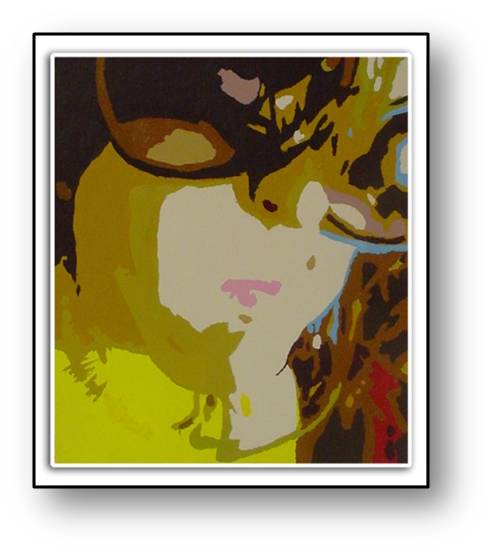
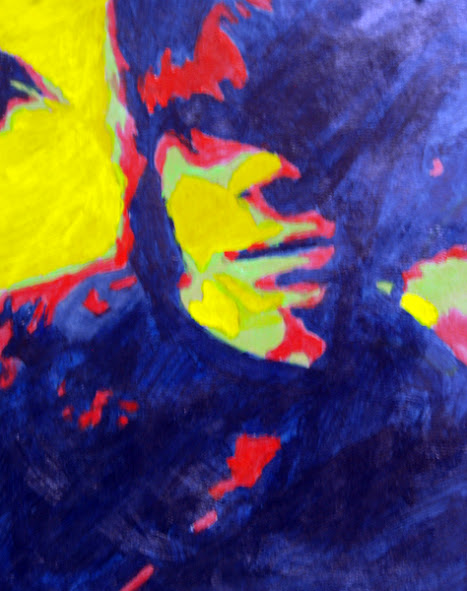
Using a specific color scheme emphasizes drama and mood to a portrait adding to its meaning.


Studio:

  • Crop a portrait photo (7"x10")
  • Image>Adjust>Levels to increase the contrast
  • Filter>Artistic>Cutout
  • Print, Grid and Transfer to a board
  • Choose a color scheme to evoke a specific mood
  • Render in acrylic paint


Color Schemes: > http://www.color-wheel-artist.com/color-schemes.html

1 or 2 Colors
  • Monochromatic monochromatic color wheel
  • Complementary Complementary Color Wheel
  • Near Complementary Near Complementary Color Wheel

3 Colors:
  • Split Complementary Split Complementary Color Wheel
  • Triad Triad Color Wheel
  • Complementary Triad Complementary Triad Color Wheel
  • Modified Triad Modified Triad Color Wheel


4 or More Colors:

  • Rectangular Tetrad Rectangular Tetrad Color Wheel
  • Square Tetrad Square Tetrad Color Scheme
  • Adjacent Tetrad Adjacent Tetrad Color Wheel
  • Analogous Analogous Color Wheel
  • Analogous Complementary Analogous Complementary Color Wheel
  • Multi-Color Multi Color Wheel


Tuesday, April 7, 2015

Create > Vortograph Images

Create > Vortograph Images


Goal: Using mirrors and reflections create 10 abstract vortographs

Studio Activity:
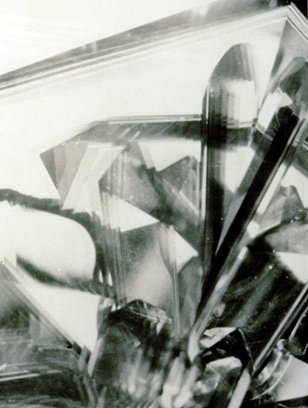
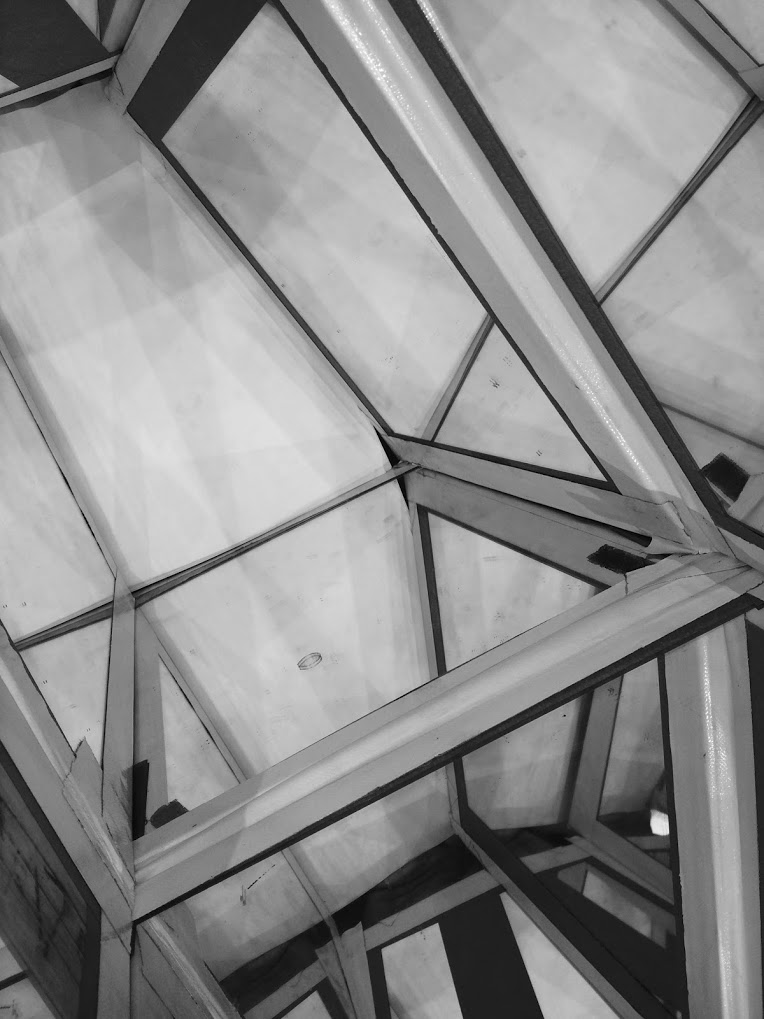
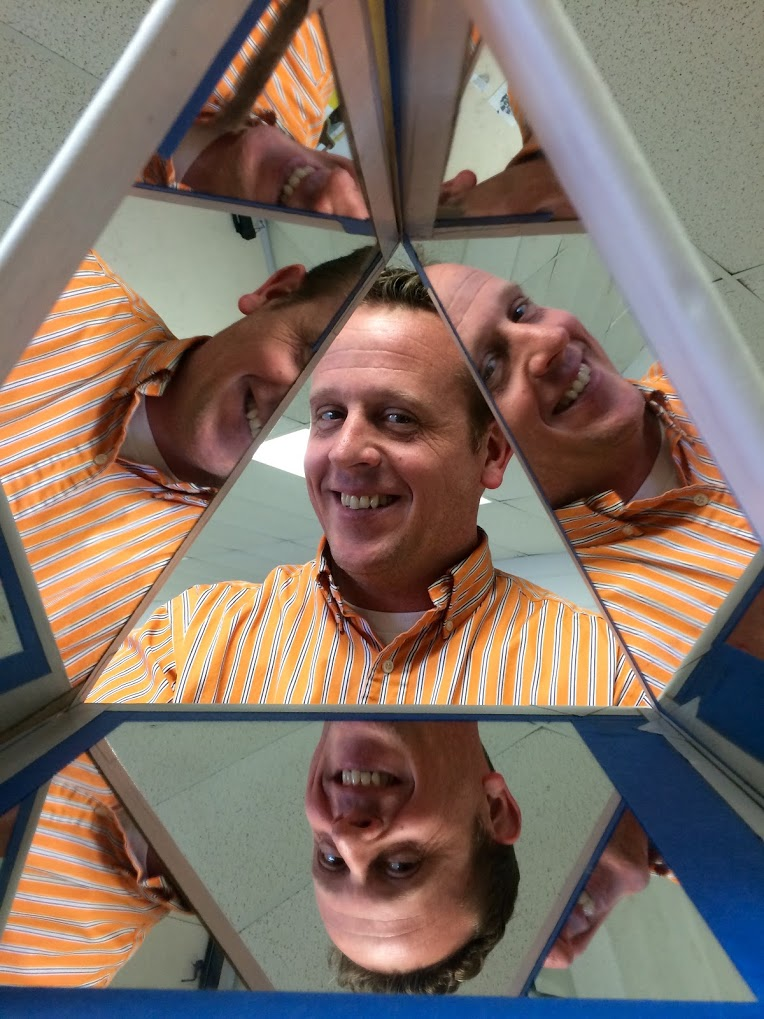
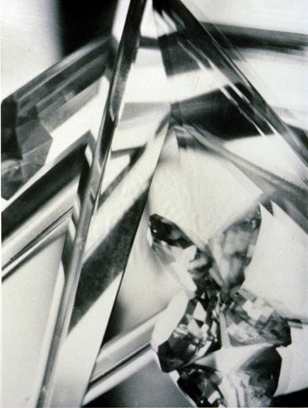
A vortograph is the first completely abstract kind of photograph.  It is composed of kaleidoscopic repetitions of forms achieved by photographing objects through a triangular arrangement of three mirrors.  Alvin Landon Coburn pioneered the non objective photographic style in 1917.  The fractured planes and complex space characteristic of vortograph reflect Coburn’s interest in Cubism.  To get the effect put three mirrors together in triangle from and shoot through them.  Other options include:
For free...
Go to a picture framing shop, and see if you can talk them into taking some scrap glass and cutting you three 1x6 inch pieces. Tape them together into a triangular prism, hold it in front of your lens and shoot through one of the open ends.
For around $10...
Go to a local stained glass shop (or order online) and get a kaleidoscope kit. Assemble the mirrors into a triangular prism, and shoot through one open end.
For around $30...
Order three 1x6 inch first surface mirrors from the "scientificities" division of Edmund Optics. Assemble the mirrors into a triangle and shoot through it.


Trigger Mechanisms: Distort, Reflection, Experimentation

Visual Examples:
Alvin Landon Coburn (Eastman House) > http://goo.gl/Pv0v9N


Generalize, Reflect & Publish:
Instructional Strategy
  • Evaluate the results
Learning Activity
Reflect > Should I go back and rework anything?
  • Have you done anything special with the art elements (line, color, shape, texture, value)  and principles? (Unity/variety, balance, emphasis contrast, rhythm, proportion/scale, figure/ground relationship)
  • What are the dominant shapes, expressive forms, color schemes, and textures that carry significance?
  • Is there symbolism used in the work to convey meaning other than what one sees?
  • Is the work ordered and balanced? Or chaotic and disturbing?
  • What gives the work its uniqueness?
  • Does the work evoke any feelings?

Instructional Strategy
  • Providing Recognition
Learning Activity
Publish > Share your album to our G+Community > Concepts & Creations category

Instructional Strategy
  • Providing Feedback
Learning Activity
Critique >
  • Give positive feedback > +1 every image that deserves it
  • Give peer feedback > VTS Visual Thinking Strategies > http://goo.gl/1WWmBY
Self-assess >

Create > Color Scheme Still Life

Create > Color Scheme Still Life


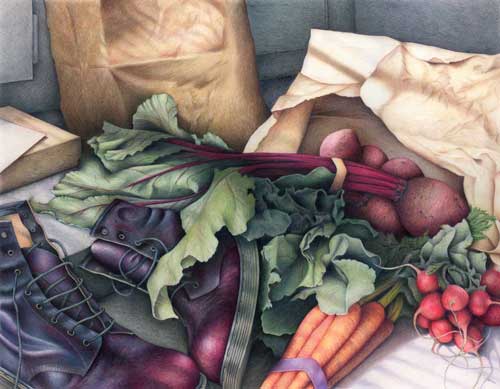
(Triad Harmonies: 3 equidistant hues)

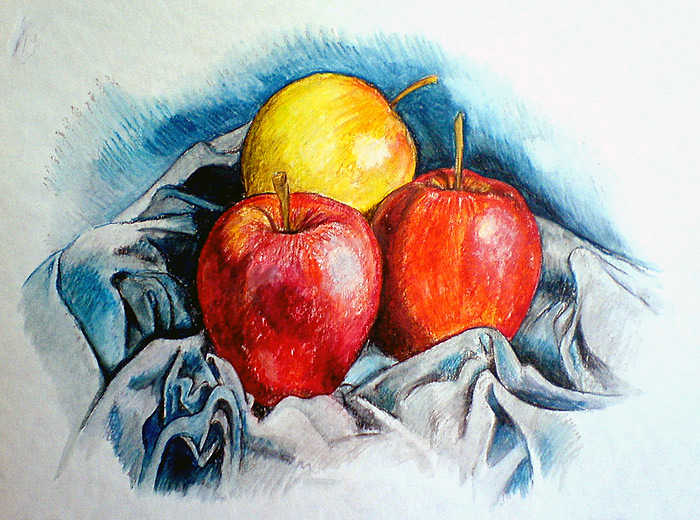
Goal: Create an accurate still life rendering in a chosen color scheme.

Studio Activity:
Take a photograph or sit and draw from observation a still life arrangement.  
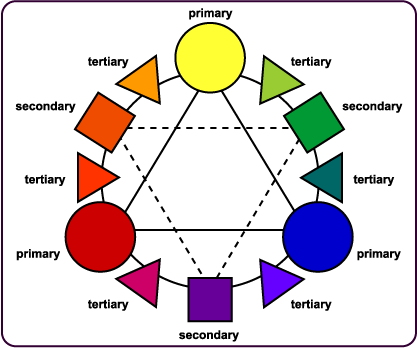
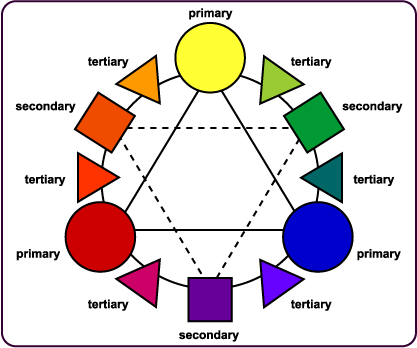
Choose a color scheme using the list and image below.
  • Triad Harmonies: three equidistant hues
  • Complementary Colors: opposite hues
  • Split Complementary: One hue with hues on either side of its complement
  • Analogous: adjacent  hues


Accurately render the composition using your color scheme and a full range of values.

Visual Examples:

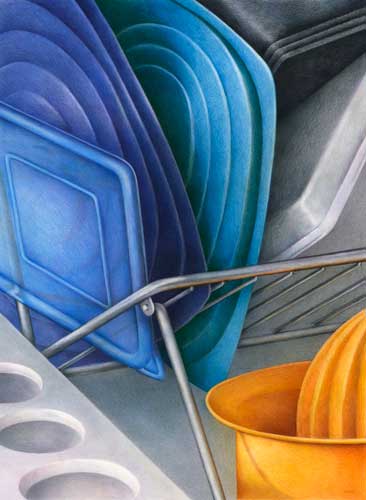
(Complementary Colors: opposite hues)


(Split complementary: one hue with hues on either side of its complement)


(Analogous: adjacent hues)


Generalize, Reflect & Publish:
Instructional Strategy
  • Evaluate the results
Learning Activity
Reflect > Should I go back and rework anything?
  • Have you done anything special with the art elements (line, color, shape, texture, value)  and principles? (Unity/variety, balance, emphasis contrast, rhythm, proportion/scale, figure/ground relationship)
  • What are the dominant shapes, expressive forms, color schemes, and textures that carry significance?
  • Is there symbolism used in the work to convey meaning other than what one sees?
  • Is the work ordered and balanced? Or chaotic and disturbing?
  • What gives the work its uniqueness?
  • Does the work evoke any feelings?

Instructional Strategy
  • Providing Recognition
Learning Activity
Publish > Share your album to our G+Community > Concepts & Creations category

Instructional Strategy
  • Providing Feedback
Learning Activity
Critique >
  • Give positive feedback > +1 every image that deserves it
  • Give peer feedback > VTS Visual Thinking Strategies > http://goo.gl/1WWmBY
Self-assess >

Create > Texture Re-Materialization

Create > Texture Re-Materialization

DSC_0014.JPG


Goal: Transform the original forms of an image using new objects and textures


Studio Activity:
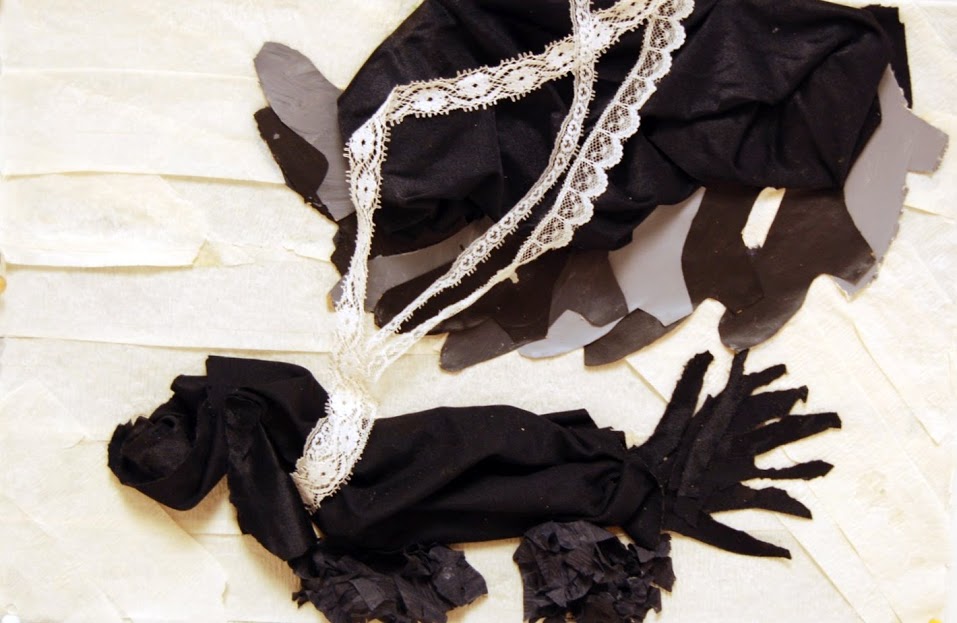
Find and use a historically significant artwork for inspiration.  Re-create the artworks subject matter and composition using found objects such as buttons, fabric or wood in place of the original materials.  Feel free to change or vary your image from the original.


Trigger Mechanisms: Transfer, change, texturize

Visual Examples:
Student examples > http://goo.gl/v0tEce
Visual examples > http://goo.gl/5AnFl9
Jane Perkins’ “Plastic Classics” > http://goo.gl/kSVit5
Recycled Art > http://goo.gl/QrcNg


Materials:
Found objects, fabric, paint

Generalize, Reflect & Publish:
Instructional Strategy
  • Evaluate the results
Learning Activity
Reflect > Should I go back and rework anything?
  • Have you done anything special with the art elements (line, color, shape, texture, value)  and principles? (Unity/variety, balance, emphasis contrast, rhythm, proportion/scale, figure/ground relationship)
  • What are the dominant shapes, expressive forms, color schemes, and textures that carry significance?
  • Is there symbolism used in the work to convey meaning other than what one sees?
  • Is the work ordered and balanced? Or chaotic and disturbing?
  • What gives the work its uniqueness?
  • Does the work evoke any feelings?

Instructional Strategy
  • Providing Recognition
Learning Activity
Publish > Share your album to our G+Community > Concepts & Creations category

Instructional Strategy
  • Providing Feedback
Learning Activity
Critique >
  • Give positive feedback > +1 every image that deserves it
  • Give peer feedback > VTS Visual Thinking Strategies > http://goo.gl/1WWmBY
Self-assess >